
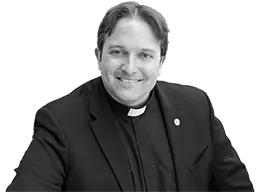
 Fr Matthew Charlesworth SJJesuit PriestSociety of JesusJesuit priest working in Southern AfricaFr. MatthewCharlesworthSJ
 Wednesday of the 2nd Week of Advent
Date: | Season: Advent | Year: A
First Reading: Isaiah 40:25–31
Responsorial Psalm: Psalm 103:1–4, 8, 10
| Response: Psalm 103:1
Gospel Acclamation: Look, the Lord will come to save his people. Blessed those who are ready to meet him.
Gospel Reading: Matthew 11:28–30
Preached at: The Jesuit Institute in the Archdiocese of Johannesburg, South Africa.
At the heart of today’s Scriptures is a steady promise: God does not tire of us, even when we are worn thin.
Dear brothers and sisters in Christ, dear friends, Advent meets us where we actually are, not where we wish we were. It meets us tired, carrying quiet worries, wondering at times whether God still sees our way clearly. The Word today does not shout at that weariness. It speaks to it calmly, firmly, and with care.
Our first reading is from the Book of Isaiah. Israel is far from home. Exile has drained confidence and prayer has grown thin. The people say out loud what many feel but rarely admit: “My way is hidden from the Lord, my cause is disregarded by my God.” This is not disbelief. It is fatigue. Isaiah answers not by arguing, but by reminding them who God is. Lift up your eyes and look, he says. In the ancient world, to name something was to claim responsibility for it. God names each star. None are missing. If that is how God holds the heavens, then his people have not been forgotten.
Isaiah draws a sharp line between God and us. God does not grow tired. God does not lose focus. We do. Even the young become weary. Even the strong stumble. And then comes the heart of the passage. God gives strength to the weary. Power is not kept at a distance. It is given away. Those who wait for the Lord renew their strength. Waiting here does not mean doing nothing. It means stopping the frantic effort to control everything. It means trusting that our lives are held, even when we feel unsteady.
The Psalm continues that trust in prayer. “Bless the Lord, O my soul.” The psalmist speaks to himself because faith sometimes needs reminding. Forget not all his benefits. The list is concrete. God forgives sin. God heals wounds. God rescues lives from the pit. God is merciful and slow to anger. This is not soft language. It is realistic faith. God does not deal with us according to our failures. Mercy interrupts the usual accounting. Love refuses to be rushed.
Then, without raising his voice, Jesus speaks in the Gospel. “Come to me, all you who labour and are burdened.” He does not explain suffering away. He names it. In his time, people carried heavy loads. Roman rule pressed down. Religious law was often taught as something to survive rather than something to live. The image of the yoke was familiar. A yoke joins two animals so the weight can be shared. Jesus does not remove the yoke. He reshapes it. “Take my yoke upon you.” This is not escape. It is companionship. His burden is light because he carries it with us.
Then Jesus tells us something rare. He speaks about his own heart. “I am gentle and humble of heart.” Not distant. Not harsh. Gentle. Humble. This is the God Advent prepares us to receive. A God who offers rest, not by changing the world overnight, but by changing how we carry it.
Ignatius of Loyola would ask us to pause here and imagine the scene. Place yourself among the crowd. Feel the weight you bring with you. Notice what makes you step forward, and what makes you hold back. In the Spiritual Exercises, grace begins with honesty. We do not meet Christ as we should be, but as we are.
Today the Church also remembers Our Lady of Loreto. The Holy House of Loreto has long been a sign of the home where God chose to dwell with us. Mary’s life reminds us that God’s strength often enters the world quietly, through ordinary places, through willing hearts. Mary carried her own weight. Fear, uncertainty, risk. Yet she trusted that God was at work within the small and fragile space of her life. Advent is shaped by that same trust. God comes close, not to impress, but to remain.
These readings speak clearly to our own setting. In South Africa weariness is part of daily life. Families stretch shrinking incomes. Young people study hard and wait for work that does not come. Many care for children, elders, and neighbours while their own strength runs low. The Gospel does not ignore this reality. It asks us to notice where the weight falls. A community shaped by the heart of Christ pays attention to who carries the heaviest load. It resists habits and systems that protect the comfortable while exhausting the poor. It looks for ways, small and real, to share responsibility more fairly.
Advent does not call us to heroic effort. It calls us to faithful attention. God does not rush us. God does not shame us for being tired. God stays. Those who hope in the Lord find new strength, not because the road becomes easy, but because it becomes shared.
Let us bring these questions into our prayer today.
- What burden am I carrying that Christ is inviting me to place into his hands, honestly and without delay?
- Who around me is growing weary under an unfair weight, and what is one practical way I can help carry that load this week?
- As Advent continues, where is God asking me to trust quietly, as Mary did, that he is at work even when the outcome is still unclear?
Source: https://sj.mcharlesworth.fr/homilies/2025-12dec-10-ya-at-02/
This homily is shared for personal and pastoral use. Please attribute the author and do not alter the meaning when quoting. If you wish this homily to be translated - there is an option on the website which will allow you to translate it into the language of your choice.
Licenced under a Creative Commons Attribution-NonCommercial-NoDerivatives 4.0 International (CC BY-NC-ND 4.0) license.
The author does not speak for the Society of Jesus or for the Catholic Church.





In preparing this homily, I consulted various resources to deepen my understanding of today’s readings, including using Magisterium AI for assistance. The final content remains the responsibility of the author.