
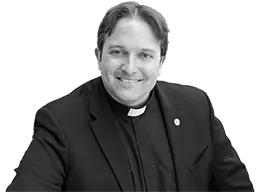
 Fr Matthew Charlesworth SJJesuit PriestSociety of JesusJesuit priest working in Southern AfricaFr. MatthewCharlesworthSJ
 Tuesday of the 3rd Week of Advent
Date: | Season: Advent | Year: A
First Reading: Zephaniah 3:1–2, 9–13
Responsorial Psalm: Psalm 34:2–3, 6–7, 17–18, 19, 23
| Response: Psalm 34:7a
Gospel Acclamation: Come, O Lord, do not delay; forgive the sins of your people.
Gospel Reading: Matthew 21:28–32
Preached at: the Chapel of Emmaus House in the Archdiocese of Harare, Zimbabwe.
Today we are challenged with a simple but uncomfortable question: will we only speak faith, or will we actually go and live it?
Dear brothers and sisters in Christ, dear friends, Advent is a season of waiting, but it is not a season of delay. It is meant to move us. It asks whether our faith remains something we talk about, or whether it becomes something we do.
Our first reading from the prophet Zephaniah speaks to people who know the language of faith but have stopped listening. Jerusalem is accused of something very ordinary and very human. They do not listen. They do not accept correction. They do not trust the Lord. This is not loud rebellion. It is the quiet resistance of people who feel secure enough to stay as they are.
And yet God does not give up on them. Zephaniah’s name means “the Lord protects,” and that promise still holds. God speaks of a future where speech itself is made clean, where people no longer talk past one another but call on the Lord together. What remains, God says, will be a humble and lowly people who take refuge in him. Advent hope is not built on power, success, or control. It belongs to those who know they need God.
The psalm takes up that same theme. “This poor man called, and the Lord heard him.” These words come from a moment of fear, when David is running for his life. Praise here is not polished. It is honest. Again and again, the psalm insists on the same truth: the Lord hears the cry of the poor; the Lord is close to the broken-hearted.
That matters where we live. In Zimbabwe today, many people carry heavy burdens. Rising prices, fragile services, young people with education but no work, families stretched thin. For many, faith is not an idea. It is what helps them get through the day. This psalm tells them, and us, that God is not distant. God is near to those who have little left except hope.
The Gospel brings us back into the Temple courtyard. Jesus has cleansed the Temple the day before. He now sits there teaching, and the chief priests and elders challenge him. By what authority are you doing this? They are trying to trap him. If Jesus claims authority from God, they can accuse him of blasphemy. If he denies it, they can dismiss him.
Jesus does not argue. He responds the way a good rabbi would, with a question of his own, about John the Baptist. They refuse to answer. To admit that John acted with God’s authority would mean admitting that Jesus, whom John pointed to, speaks and acts with that same authority. And so they stay silent.
Then Jesus tells a story.
A father asks his two sons to work in the vineyard. One says no, openly and without polish. Later, he changes his mind and goes. The other says yes, respectfully, even piously. The word he uses can mean “Lord.” But he never shows up.
The vineyard is not an abstract image. The chief priests were meant to be tending it. Instead, they had allowed it to be overrun by money and commerce. The people who should have been helped to pray were being exploited. Jesus has just cleared that space, and now he teaches in it.
The shock of the parable is clear. The son with bad manners does the father’s will. The son with good words does not. And then Jesus sharpens the point. Tax collectors and prostitutes believed John the Baptist. They repented. They stepped into the waters of the Jordan and began again. Public sinners went into the vineyard. The religious leaders watched all this and stayed still.
John came, Jesus says, “in the way of righteousness.” His call was simple: repent, the kingdom is near. When crowds responded, that should have been a sign. It should have moved the leaders to change, to prepare their hearts, to welcome what God was doing. Instead, they persisted. They refused to turn. They plotted to protect their position rather than serve God’s purpose.
Advent does not allow us to hide behind the right words. It asks us to look honestly at ourselves. Which son am I today?
Ignatian prayer helps us here. St Ignatius asks us to place ourselves inside the scene. Notice the father’s patience. Notice the sons. Pay attention to which one feels closer to your own life. Change begins not with grand plans, but with honesty. Where am I delaying? Where am I saying yes with my mouth and no with my feet? Where am I being invited, even now, to turn and go?
The Gospel also reminds us that the vineyard needs work. It needs tending, clearing, watering, pruning. These are images of the spiritual life. They are not dramatic, but they are faithful. Advent is a time to ask what needs attention in the vineyard of my own soul. What habits choke growth? What needs to be pruned? Where has God already been at work, waiting for me to join in?
In our local context, this might mean more than good intentions. It might mean concrete care for people in need, honest work for the common good, refusing small corruptions that damage trust, or standing with those who are overlooked. Faith that stays polite and private does not heal much. Faith that shows up, even imperfectly, can change lives.
Advent prepares us for Jesus, who will not flatter us. He comes quietly, as a child, poor and dependent. He will grow into a man who walks dusty roads and calls people not to admire him, but to follow him.
The message today is not complicated. God is patient. God welcomes those who turn back, even late. But God does ask us to go.
As we approach the Eucharist, we ask for the grace to let our faith move from words to action, from intention to practice, from promise to obedience. Advent is short. The vineyard is waiting.
As you pray with these readings this week, you might ask yourself:
- Where in my life am I saying the right things to God but avoiding real change?
- Who near me needs more than my concern, and what simple action is within my reach?
- When I look back over my day, where did I stay still, and where did I, even reluctantly, choose to go?
Source: https://sj.mcharlesworth.fr/homilies/2025-12dec-16-ya-at-03/
This homily is shared for personal and pastoral use. Please attribute the author and do not alter the meaning when quoting. If you wish this homily to be translated - there is an option on the website which will allow you to translate it into the language of your choice.
Licenced under a Creative Commons Attribution-NonCommercial-NoDerivatives 4.0 International (CC BY-NC-ND 4.0) license.
The author does not speak for the Society of Jesus or for the Catholic Church.





In preparing this homily, I consulted various resources to deepen my understanding of today’s readings, including using Magisterium AI for assistance. The final content remains the responsibility of the author.