
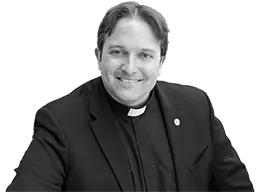
 Fr Matthew Charlesworth SJJesuit PriestSociety of JesusJesuit priest working in Southern AfricaFr. MatthewCharlesworthSJ
 17th December
Date: | Season: Advent | Year: A
First Reading: Genesis 49:2, 8–10
Responsorial Psalm: Psalm 72:1–2, 3–4ab, 7–8, 17
| Response: Psalm 72:7
Gospel Acclamation: O Wisdom of our God Most High, guiding creation with power and love: come to teach us the path of knowledge!
Gospel Reading: Matthew 1:1–17
Preached at: the Chapel of Emmaus House in the Archdiocese of Harare, Zimbabwe.
Dear brothers and sisters in Christ, dear friends, we are now in the final days before Christmas, and the Church deliberately slows our pace. Advent narrows our focus. The noise fades, and what remains is memory: a long remembering of what God has promised and how patiently he has kept those promises. Today, 17 December, the readings ask us to look back—not out of nostalgia, but so that we can recognise what is about to arrive.
Our first reading comes from the Book of Genesis. Jacob is close to death. He gathers his sons and speaks over them, not gently, but truthfully. When he turns to Judah, his words carry weight far beyond the moment: the sceptre shall not depart from Judah. Leadership, continuity, and hope are bound to this family line. For Israel, this blessing became a promise that history itself was leaning toward a king, toward the Messiah.
And yet Judah himself is no hero. His story is tangled with failure, cowardice, and moral compromise. Scripture does not tidy this up. It leaves the rough edges visible. God does not wait for perfect ancestors or flawless leaders. He works through what is real. That is good news for families carrying regret, for communities worn down by disappointment, and for a country like Zimbabwe, where many feel the weight of broken systems and unkept promises. God does not abandon history when it becomes messy. He stays with it.
The psalm today is a prayer for a king, but it quietly redefines what kingship means. This ruler is judged not by strength or success, but by care for the poor, defence of the weak, and faithfulness to justice. Peace flows not from control, but from righteousness. When we pray this psalm, we are not only praying for leaders; we are allowing God to question us. In our homes, our workplaces, our parishes, even our conversations, we exercise small forms of power. The psalm asks: does our influence lift others, or does it weigh them down?
The Gospel brings us to Matthew’s genealogy. A list of names can sound dull when read aloud, but Matthew is doing something precise and deliberate. He arranges Jesus’ ancestry into three sets of fourteen generations. This is not accidental. In Hebrew, the name David carries the numerical value of fourteen. Matthew is saying, quietly but firmly, that Jesus is the “thrice-David,” the true heir of the promise. The long-awaited king has arrived.
Those three sections tell the whole story of Israel. First, from Abraham to David: the kingdom promised. God’s word to Abraham—that kings would come from him—begins to take shape. Then from David to the Babylonian exile: the kingdom occupied and broken. Most of David’s successors fail. Infidelity, injustice, and compromise hollow out the kingdom from within. Finally, from the exile to Jesus: the kingdom hoped for in darkness. Israel becomes like an olive tree cut down to a stump. Yet even a stump can bear a shoot.
That shoot is Christ. Matthew’s genealogy is not a record of human success; it is a testimony to divine faithfulness. Even exile does not cancel God’s word. Even centuries of silence do not undo his promise.
Matthew also does something unexpected. He names women who would usually be excluded from such a list: Tamar, Rahab, Ruth, Bathsheba. Some are foreigners. Some carry scandal. Some survive through courage rather than respectability. Matthew makes his point unmistakable. God’s plan moves forward through complicated lives. Grace is not blocked by human weakness. No one is erased.
This is where Advent becomes personal. Jesus does not arrive outside history, but through it. Through families, through failure, through long waiting. In the Spiritual Exercises, Ignatius asks us to notice where God is already at work in our own story. This Gospel invites the same attention. Our lives may feel ordinary or unfinished, but they are precisely the place God chooses to enter.
For young people unsure whether their future has room to grow, for parents trying to hold households together, for those seeking work, dignity, or fairness in Zimbabwe today, this Gospel speaks quietly but firmly: your life is not overlooked. Your name matters. God knows where he is coming from, and he knows where he is going—and he chooses to pass through human lives to get there.
Advent, then, is not about rushing ahead to Christmas. It is about trusting that the God who was faithful to Abraham, to David, and even through exile, will be faithful still. Christ comes as a king, but not like the kings who failed before him. He comes to serve, to forgive, and to carry the weight of his people.
So as Christmas draws near, the question is simple and serious. Will we make room for him—not only in prayer, but in how we treat others, especially the weakest?
In the days ahead, it may help to sit with these questions:
- Where in my own story, with all its faults and gifts, might God be quietly at work?
- Whose names do I forget or avoid, but whom God remembers?
- What small, real change can I make this week to prepare a place for Christ in my daily life?
Source: https://sj.mcharlesworth.fr/homilies/2025-12dec-17-ya-at-03/
This homily is shared for personal and pastoral use. Please attribute the author and do not alter the meaning when quoting. If you wish this homily to be translated - there is an option on the website which will allow you to translate it into the language of your choice.
Licenced under a Creative Commons Attribution-NonCommercial-NoDerivatives 4.0 International (CC BY-NC-ND 4.0) license.
The author does not speak for the Society of Jesus or for the Catholic Church.





In preparing this homily, I consulted various resources to deepen my understanding of today’s readings, including using Magisterium AI for assistance. The final content remains the responsibility of the author.