
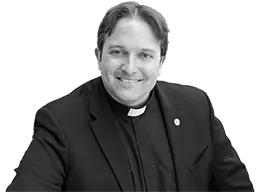
 Fr Matthew Charlesworth SJJesuit PriestSociety of JesusJesuit priest working in Southern AfricaFr. MatthewCharlesworthSJ
 18th December
Date: | Season: Advent | Year: A
First Reading: Jeremiah 23:5–8
Responsorial Psalm: Psalm 72:1–2, 12–13, 18–19
| Response: Psalm 72:7
Gospel Acclamation: O Leader of the House of Israel, giver of the Law to Moses on Sinai: come to rescue us with your mighty power!
Gospel Reading: Matthew 1:18–25
Preached at: the Chapel of Emmaus House in the Archdiocese of Harare, Zimbabwe.
Dear brothers and sisters in Christ, these last days of Advent feel like that moment just before morning, when the world is still dark but something inside us knows that light is near. We are close to Christmas now, close to a promise about to take flesh.
Our first reading from the prophet Jeremiah speaks to people who are tired of being let down. Their leaders have failed them. The nation is broken. Many have been scattered far from home. Into that reality God does not offer a speech, but a promise. A new king will come, a righteous branch from David’s line. He will do what is right. He will gather the scattered and bring them home.
In the Bible, righteousness is not about moral perfection. It means relationships put right again: between God and people, between rulers and the poor, between neighbours who have been torn apart by fear or injustice. God promises not only to bring the people home, but to renew how they understand salvation itself. God is not only the one who once rescued them from Egypt. God is the one who keeps rescuing, again and again, even after failure.
That promise becomes a prayer in Psalm 72. “In his days justice shall flourish, and peace till the moon fails.” The psalm measures good leadership in a very simple way. Does it defend the poor? Does it listen to the cry of the weak? Peace here is not silence or the absence of conflict. Peace grows when people are treated with dignity. In Zimbabwe today, many are still waiting for that kind of peace. Families struggle with rising costs. Young people search for work and purpose. The psalm reminds us that God’s dream for society always begins with care for those who have the least.
That long hope comes to rest in a small, human moment in today’s Gospel from Matthew. We are told how the genesis of Jesus came about — not only where he comes from in human history, but who he comes from. Matthew is careful to say that Jesus is born of Mary, through the Holy Spirit. This child belongs fully to our human story, and yet his origin is divine. God is not sending help from far away. God is entering the story from within.
Joseph stands right at the edge of that mystery. He is a good man who wants to act justly. When he learns that Mary is pregnant, he makes a careful plan. He will step away quietly. No drama. No public shame. It is a decent solution. But it is not yet God’s solution. Then Joseph falls asleep, and God speaks through a dream. In the Bible, dreams are not an escape from reality. They are often the place where God interrupts our careful thinking.
The angel calls him “son of David,” linking Joseph directly to the promise spoken by Jeremiah. He is told to name the child Jesus — Yeshua — which means “the Lord saves.” Not only from the consequences of sin, but from sin itself. This child will not simply rescue people from danger; he will teach them how to live differently. And Matthew adds the ancient promise from Isaiah: the child will be called Emmanuel — God with us. Not God above us. Not God watching from a distance. God with us, in the middle of human uncertainty.
Joseph wakes up changed. He does not suddenly understand everything. But he trusts enough to act. He takes Mary into his home. He accepts a future he did not plan. Matthew quietly notes that this child is born of a virginal love — not because human love is unimportant, but because this life begins entirely as gift. Salvation is not something we engineer. It is something we receive.
In Ignatian prayer, we are invited to stay with that moment. To imagine Joseph waking in the quiet, feeling the weight of the choice before him. Faith often begins there — not with clarity, but with trust strong enough to move us.
This is where Advent meets our own lives. Many people today believe that all we have is ourselves and a short lifetime to make things work. The Gospel tells us something gentler and braver. We are needy, and we are not alone. God does not save us from a distance. God steps into family tension, social stress, political disappointment, and quiet fear. In Jesus, God becomes the bridge between heaven and earth, fully faithful to God and fully merciful toward us.
As a community, this asks us to wake up too. Where do we experience God’s presence — in Scripture, in the Eucharist, in family love, in the poor at our door? And how are we called today to live our priesthood — not only here at the altar, but in daily acts that make God’s nearness visible?
As Christmas draws near, hold on to this image. A man wakes from sleep, lets go of fear, and chooses trust. God is already at work — saving, gathering, healing — often more quietly than we expect.
As you pray today, sit with these questions:
- Where might God be asking me to trust beyond my careful plans?
- Where do I recognise God already present in my life?
- What small step can I take today to make God-with-us real for someone else?
Source: https://sj.mcharlesworth.fr/homilies/2025-12dec-18-ya-at-03/
This homily is shared for personal and pastoral use. Please attribute the author and do not alter the meaning when quoting. If you wish this homily to be translated - there is an option on the website which will allow you to translate it into the language of your choice.
Licenced under a Creative Commons Attribution-NonCommercial-NoDerivatives 4.0 International (CC BY-NC-ND 4.0) license.
The author does not speak for the Society of Jesus or for the Catholic Church.





In preparing this homily, I consulted various resources to deepen my understanding of today’s readings, including using Magisterium AI for assistance. The final content remains the responsibility of the author.