
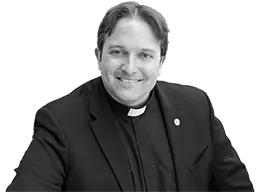
 Fr Matthew Charlesworth SJJesuit PriestSociety of JesusJesuit priest working in Southern AfricaFr. MatthewCharlesworthSJ
 20th December
Date: | Season: Advent | Year: A
First Reading: Isaiah 7:10–14
Responsorial Psalm: Psalm 24:1–6
| Response: Psalm 24:7c, 10b
Gospel Acclamation: O Key of David, opening the gates of God’s eternal Kingdom: come and free the prisoners of darkness!
Gospel Reading: Luke 1:26–38
Preached at: the Chapel of Emmaus House in the Archdiocese of Harare, Zimbabwe.
Dear brothers and sisters in Christ, dear friends, in these final days before Christmas the Church asks us to slow down and pay attention, because the most important things in our faith happen without noise, without spectacle, and often without recognition.
Our first reading from the prophet Isaiah takes us into a moment of deep political and spiritual anxiety. Judah is under threat. King Ahaz is frightened, calculating, cornered. Isaiah offers him reassurance and even invites him to ask God for a sign. Ahaz refuses. His words sound pious, but they hide fear. He does not want a sign because a sign would demand trust. It would require him to stake his future on God rather than on his own strategies. So God gives a sign anyway, not to overpower Ahaz, but to promise presence. A young woman shall conceive and bear a son, and she shall name him Emmanuel. In Scripture, names are not labels; they are revelations. Emmanuel means God is with us. Not God will remove all danger. Not God will make things easy. But God will be here, inside history, inside fear, inside human vulnerability.
The psalm today takes that promise and turns it into a searching question. If the whole earth belongs to the Lord, who may ascend the mountain of the Lord? Who may stand in his holy place? The answer is strikingly simple: those with clean hands and pure hearts. In Israel’s worship, this psalm was sung as the Ark of the Covenant was brought into Jerusalem. The people cried out for the gates to lift their heads, as if even stone and timber were expected to respond to God’s coming. Holiness was not about escape from the world, but about integrity within it. God draws near, and the question is whether hearts and lives are open enough to receive him.
If we sit with these texts patiently, one truth emerges. God does not hurry. He does not force belief or silence questions. He places a promise before us and waits.
That same divine patience shapes today’s Gospel from Luke. The angel Gabriel is sent, not to a palace or a capital, but to Nazareth, an unremarkable village. Mary is introduced quietly, but Luke is careful to tell us something important about her betrothed. Joseph is not simply descended from David; he belongs to the house of David. Though he works with his hands as a carpenter, he stands within the royal line to whom God once promised an everlasting kingdom. The throne of David has not disappeared; it has been hidden, waiting. Joseph is, in that sense, a hidden king, and the child to be born will inherit that promise.
Gabriel’s message makes this explicit. Mary’s son will be great. He will be called Son of the Most High. He will receive the throne of his father David, and his kingdom will have no end. These are not new ideas. They echo God’s ancient covenant with David: a name made great, a royal son called God’s son, a house established forever. What is new is how this promise will be fulfilled. Not through conquest, not through power, but through the consent of a young woman and the faithfulness of a humble man.
Mary’s response matters. Yesterday we heard of Zechariah, who also received an angelic announcement. He asked, “How shall I know this?” and looked first at impossibility. Mary asks, “How can this be?” Her question is not doubt but discernment. She believes the promise and seeks a way to live it faithfully. She does not ask for a sign. She asks how to cooperate with God’s will. Zechariah is struck silent. Mary breaks into praise and sets out in service. Faith opens her outward.
In Ignatian prayer we are invited to step into this scene. Imagine the stillness of that room. The angel waits. God waits. Salvation history pauses, not because God is uncertain, but because human freedom matters. “Let it be done to me according to your word.” This is not resignation. It is courageous trust. Mary opens the door that Ahaz kept closed.
These readings speak powerfully into our own lives. Many people in Zimbabwe live with an uncertainty that slowly drains hope. The cost of living rises. Work is hard to find. Families make careful decisions about food, school fees, transport, and medicine. Like Ahaz, we are tempted to rely only on what we can manage. Like him, we may cloak fear in reasonable language. Yet God does not withdraw. Emmanuel means God draws nearer, asking not for control, but for trust and integrity.
The psalm’s call to clean hands and honest hearts takes on real weight here. Integrity matters when systems are strained. Justice matters when resources are scarce. The dignity of each person is not an abstraction. It is Emmanuel in flesh. To welcome God is to resist the small compromises that harden the heart. It is to notice who is being overlooked and to make room, even when space feels limited.
Mary shows us what this looks like. She does not understand everything. She receives no guarantees. She entrusts herself to a promise and allows God’s future to take flesh within her. In the Spiritual Exercises, Ignatius invites us each day to notice where God has been present and how we have responded. Advent is that examen stretched over weeks. Where have we sensed God’s invitation? Where have we hesitated? Where have we said yes, quietly, without being seen?
As Christmas approaches, the Angelus helps us remember what we easily forget. The Word became flesh and dwelt among us. Not above us. Not around us. Among us. When anxiety tightens, when resentment grows, when fatigue dulls compassion, the Angelus returns us to Nazareth, to a God who waits for consent, not applause.
The story we are preparing to celebrate does not end with angels and song. It continues in ordinary homes, fragile economies, difficult decisions, and patient hope. Emmanuel is already with us. Advent keeps asking only this: how will we receive him now?
As you carry these days into prayer and into life, I invite you to reflect quietly on three questions.
- Where in my life am I being invited to trust God’s presence rather than rely only on my own control?
- Whose dignity is God asking me to honour this week, especially where it costs me time, comfort, or certainty?
- And what simple, concrete yes can I offer, like Mary, so that Christ may take flesh again in my world?
Source: https://sj.mcharlesworth.fr/homilies/2025-12dec-20-ya-at-03/
This homily is shared for personal and pastoral use. Please attribute the author and do not alter the meaning when quoting. If you wish this homily to be translated - there is an option on the website which will allow you to translate it into the language of your choice.
Licenced under a Creative Commons Attribution-NonCommercial-NoDerivatives 4.0 International (CC BY-NC-ND 4.0) license.
The author does not speak for the Society of Jesus or for the Catholic Church.





In preparing this homily, I consulted various resources to deepen my understanding of today’s readings, including using Magisterium AI for assistance. The final content remains the responsibility of the author.