
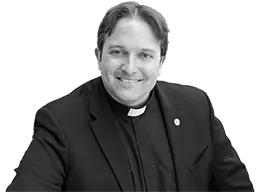
 Fr Matthew Charlesworth SJJesuit PriestSociety of JesusJesuit priest working in Southern AfricaFr. MatthewCharlesworthSJ
 Solemnity of the Nativity of the Lord (Midnight)
Date: | Season: Christmas | Year: A
First Reading: Isaiah 9:1–6
Responsorial Psalm: Psalm 96:1–3, 11–13
| Response: Psalm 2:11
Second Reading: Titus 2:11–14
Gospel Acclamation: Luke 2:10–11
Gospel Reading: Luke 2:1–14
Preached at: the Chapel of Emmaus House in the Archdiocese of Harare, Zimbabwe.
The night has a way of telling the truth. When the streets grow quiet, the noise inside us often grows louder. Worries we have kept busy during the day begin to speak. Regrets knock. Hopes feel thin. And so we gather here, in the deep hush of Christmas night, in our own community, not because everything is calm, but because we need a word that can reach us in the dark. This night tells us, in one quiet story, that God chooses to enter the world not by force but by closeness, not by spectacle but by tenderness.
We are not here as spectators of a familiar tale. We are here as people invited inside it. Christmas does not begin with trumpets. It begins with a child who breathes our air, who cries in the night, who sleeps on borrowed straw. God does not shout over our inner noise. God whispers into it.
Isaiah knew that noise well. The people he spoke to had learned to live with fear. Their land had been trampled. Their future felt stolen. Isaiah does not deny the darkness; he names it. “The people who walked in darkness have seen a great light.” Not those who escaped it or conquered it, but those who walked through it—slowly, wearily, still moving forward.
And Isaiah dares to say that the answer to such darkness will not be an army or a policy or a clever plan. It will be a child. Then come the names, heavy with hope: Wonderful Counsellor, Mighty God, Everlasting Father, Prince of Peace. In the Scriptures, to name is to reveal the heart. This child will carry wisdom that listens, strength that protects without crushing, authority that heals rather than humiliates, peace that is not imposed but offered.
The psalm takes that promise and stretches it across the whole of creation. Sea and sky, fields and forests are called to sing. This is not background music; it is a confession of faith. When God draws near, nothing is untouched. Even the land breathes again. “He comes to judge the earth,” the psalm says—not to terrify it, but to set it right. Judgment here is not revenge; it is repair. It is God refusing to leave things broken.
Saint Paul, writing to Titus, brings that great vision down to daily life. “The grace of God has appeared.” Appeared—not as an idea, but as a presence that trains us. Grace teaches us how to live: how to say no to what corrodes us from within, and yes to what gives life. Salvation is not an escape from the world; it is learning how to stand in it with integrity, patience, and hope.
Then Luke leads us into the night itself. A decree from Caesar. An empire counting heads, measuring worth, tightening control. Caesar believes history turns on his command. This census was no quiet administrative detail. It was a massive imperial event, flooding towns with travellers, filling every room, driving prices beyond the reach of the poor. Bethlehem would have been bursting at the seams. And as so often happens when markets tighten and crowds surge, those with least were the first pushed aside.
So there is no room in the inn. Not because hearts are cruel, but because lives are crowded and systems favour those who can pay. And into that world—already shaped by economics and exclusion—God slips in quietly, born far from power, in Bethlehem, the house of bread. The Son of God is laid where animals feed. From the beginning, he chooses the place of hunger.
This is no accident of history. The One laid in a manger will one day say, “I am the bread of life.” Before he teaches, before he heals, before he dies and rises, he allows himself to be placed where food is kept. The child wrapped in cloths is already offering himself. The hands that cannot yet hold bread will one day take it, bless it, break it, and give it. From the first night of his life, Jesus shows us who God is: a God who becomes food for a hungry world, a God who meets us not in abundance but in need.
The angels do not go to palaces or temples. They go to shepherds—men who worked the night shift, men whose voices carried little weight. “Do not be afraid,” they are told. That one sentence unlocks everything. Fear is the deepest ruler of the human heart: fear of loss, fear of being forgotten, fear of not having enough. God’s answer to fear is not an argument. It is a child. “Today,” the angel says—not someday, not when conditions improve, but today.
Here the long promise comes home. Isaiah’s light. The psalm’s rejoicing earth. Paul’s grace shaping ordinary lives. All of it arrives here, in a stable, under the breath of animals, in the arms of a tired young mother. The covenant bends low enough for us to touch.
Ignatius would ask us to slow down. To use our senses. Feel the cold night air. Hear the sheep shift in the dark. Notice Mary’s hands—rough and gentle—and Joseph standing slightly aside, watchful, unsure. Where are you in this scene? Standing back? Kneeling, overwhelmed? Or distracted, already thinking of tomorrow?
For many of us, this feels close to home. We know nights of strain. We know power cuts, when families gather around a single candle or gas-light, sharing a simple meal, telling stories to keep the darkness at bay. In such moments, something quiet and strong is born—a dignity no outage can take away, a closeness that does not depend on comfort.
We also know the faces of modern shepherds: migrant workers far from home, young people searching for work that never quite appears, families living on the edge, unseen and unheard. The Gospel tells us that God goes first to them—not as a symbol, but as a choice. If God entrusts his good news to the overlooked, then no life is disposable, no voice too small.
The angels sing of peace—but not the thin peace of slogans or force. This peace begins where fear loosens its grip. It grows wherever people choose to share rather than hoard, to listen rather than dismiss, to forgive rather than harden. “Prince of Peace” is not a title to admire; it is a way to follow.
“Do not be afraid” is not a gentle suggestion. It is a call to courage: courage to care for the unemployed in our parish, to notice those who fall through our systems, to protect the earth the psalm calls to rejoice. When God comes to set the world right, it includes how we treat land and water and air. Justice is always communal. It is never only about me and God; it is about us and the world we share.
Bethlehem leads us quietly to this altar. The child laid in a manger becomes the bread given for the journey—not a prize for the perfect or a reward for the strong, but, as Pope Francis reminds us, medicine for the sick and strength for the weary. Tonight, God is inviting us to communion—not because we are ready, but because we are hungry; not because we are worthy, but because we are loved. And still God chooses closeness, still entrusts himself to our fragile hands.
So tonight, the light Isaiah promised does not dazzle. It warms. It asks something of us: to walk differently, to live gently, to make room.
As this night draws on, the Church joins the Holy Father in appealing for peace—not peace as a slogan or silence enforced by fear, but peace born of courage, patience, and mercy. We cannot sing “peace on earth” while turning away from the cries of those trapped in war and hunger. We hold before God the suffering of Gaza, Ukraine, Sudan, and all places where children sleep to the sound of violence rather than lullabies. We pray for leaders, that power may learn humility, and for peoples, that grief may not harden into hatred.
But the appeal for peace does not stop at national borders. It passes through our homes, our streets. Peace begins when we choose not to wound with words, when we refuse to let anger have the final say, when we make room for those who feel invisible. The Prince of Peace does not ask us to fix the world tonight. He asks us to stop adding to its wounds.
As we leave this place, the night will still be dark—but it will no longer be empty. God has chosen to be here.
So let us carry these questions into the days ahead:
- Where is God asking to be born again in my life, quietly and without applause?
- Whose darkness am I being invited to walk into with patience and care?
- And what fear, tonight, am I ready to place into the hands of this child who says to us, again and again: do not be afraid.
Source: https://sj.mcharlesworth.fr/homilies/2025-12dec-25-ya-ct-01a/
This homily is shared for personal and pastoral use. Please attribute the author and do not alter the meaning when quoting. If you wish this homily to be translated - there is an option on the website which will allow you to translate it into the language of your choice.
Licenced under a Creative Commons Attribution-NonCommercial-NoDerivatives 4.0 International (CC BY-NC-ND 4.0) license.
The author does not speak for the Society of Jesus or for the Catholic Church.





In preparing this homily, I consulted various resources to deepen my understanding of today’s readings, including using Magisterium AI for assistance. The final content remains the responsibility of the author.