
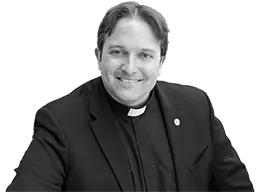
 Fr Matthew Charlesworth SJJesuit PriestSociety of JesusJesuit priest working in Southern AfricaFr. MatthewCharlesworthSJ
 Solemnity of the Nativity of the Lord (Day)
Date: | Season: Christmas | Year: A
First Reading: Isaiah 52:7–10
Responsorial Psalm: Psalm 98:1–6
| Response: Psalm 98:3c
Second Reading: Hebrews 1:1–6
Gospel Acclamation: A hallowed day has dawned upon us. Come, you nations, worship the Lord for today a great light has shone down upon the earth.
Gospel Reading: John 1:1–18
Preached at: the Chapel of Emmaus House in the Archdiocese of Harare, Zimbabwe.
Dear brothers and sisters in Christ, Christmas Day asks us to look again at the world we thought we knew, and to notice that God has already stepped into it. Not from above, not from far away, but from within.
Our first reading from the prophet Isaiah gives us an image full of life. A runner appears on the hills, breathless, joyful, carrying news that changes everything. In the ancient world, cities waited anxiously for such messengers. After years of exile and loss, people longed for a sign that God had not turned away. The message is simple and strong: peace is coming, salvation is near, your God reigns. Isaiah says that God bares his holy arm before all nations. God does not hide. God steps forward. Sleeves rolled up, heart open. Come, all peoples, and adore. A great light has come.
The psalm we sing answers that message with joy. It calls the whole world to sing. Seas roar. Rivers clap. Hills rejoice. This is not quiet happiness. This is joy that spills over. Why such joy? Because God has remembered his mercy and his faithfulness. Remembered means God has acted. In a time like ours, here in Zimbabwe, where many feel worn down by worry, by rising costs, by uncertain work and fragile hopes, this psalm insists that joy still has a place. Not because life is easy, but because God is near.
Our second reading tells us how near God has come. Long ago, God spoke in many ways, through prophets and signs. Now God speaks in one clear way: through a Son. Not a message sent from heaven, but a life lived on earth. Jesus shows us exactly what God is like. When we see him, we see the Father’s heart. This is not a distant God who watches from the clouds. This is a God who walks our roads and carries our weight.
Then the Gospel from John takes us even deeper. In the beginning was the Word. Before time began, there was meaning and love. And the Word became flesh and lived among us. John says God pitched his tent with us. God moved into the neighbourhood. God learned our language. God felt hunger and tiredness and joy. God chose a body. To all who receive him, John says, he gives the power to become children of God. This is the great exchange of Christmas. God shares our humanity so that we may share his life.
At this Mass, we see that mystery again. On the altar, in bread and wine, the same Jesus is present. The Child of Bethlehem comes to us quietly, gently. The Church dares to pray that through him this holy exchange continues, that as he shares our life, we too are drawn into his eternal life. Christmas joy is not just something we feel. It is something we receive.
This joy already points us toward Easter. The light of Christmas Day is the same light that will shine from the empty tomb. The kindness of God has appeared, not to condemn, but to save, to heal, to set us free by grace. The manger and the cross belong together. Love begins small, but it never stays small.
Saint Ignatius of Loyola would ask us to stay with the scene. To imagine it slowly. To use our senses. See the Child. Hear the quiet of the stable. Feel the warmth of his closeness. Let gratitude rise. This is how faith grows, not by rushing past the mystery, but by letting it touch the heart.
Today we come forward like the Magi. We bring gifts, not in our hands, but in our lives. Gold, the gift of love, offered back to God. Frankincense, the gift of faith, even when trust is hard. Myrrh, the gift of letting go of sin, habits, and fears that keep us from life. To receive Communion is to say yes to being changed.
As we near the end of this feast, we hear again the appeal of the Church this Christmas: an appeal for peace. Not peace as a slogan, but peace as a choice. Peace in homes strained by anger. Peace in communities divided by fear. Peace in a world wounded by war and indifference. The Child in the manger has no weapons, no armies, no loud voice. Yet he is called Prince of Peace. If we receive him, we must carry that peace into our speech, our politics, our priorities, and our daily dealings. God chose closeness over force. So must we.
The light shines in the darkness, and the darkness has not overcome it. Not then. Not now.
As we carry this joy into the week ahead, three simple questions can guide us.
- Where have I noticed God being close to me, even in small ways?
- What gift am I being invited to offer Christ this Christmas?
- And how can I become a maker of peace, in one real and concrete way, this week?
May the Word made flesh fill us with joy, shape us for peace, and change us from within. Amen.
Source: https://sj.mcharlesworth.fr/homilies/2025-12dec-25-ya-ct-01c/
This homily is shared for personal and pastoral use. Please attribute the author and do not alter the meaning when quoting. If you wish this homily to be translated - there is an option on the website which will allow you to translate it into the language of your choice.
Licenced under a Creative Commons Attribution-NonCommercial-NoDerivatives 4.0 International (CC BY-NC-ND 4.0) license.
The author does not speak for the Society of Jesus or for the Catholic Church.




In preparing this homily, I consulted various resources to deepen my understanding of today’s readings, including using Magisterium AI for assistance. The final content remains the responsibility of the author.