
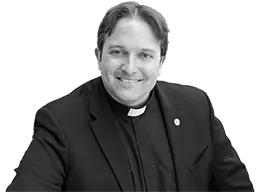
 Fr Matthew Charlesworth SJJesuit PriestSociety of JesusJesuit priest working in Southern AfricaFr. MatthewCharlesworthSJ
 Sixth Day in the Octave of Christmas
Date: | Season: Christmas | Year: A
First Reading: 1 John 2:12–17
Responsorial Psalm: Psalm 96:7–10
| Response: Psalm 96:11a
Gospel Acclamation: Hebrews 1:1-2
Gospel Reading: Luke 2:36–40
Preached at: the Chapel of Emmaus House in the Archdisocese of Harare, Zimbabwe.
Dear brothers and sisters in Christ, dear friends, the days after Christmas feel different. Things slow down. The celebrations ease. The world treats Christmas as a single day and quickly moves on, but the Church does not. She insists that Christmas is a season, not a moment. She stays here a little longer because the heart of Christmas is not grasped in excitement, but in reflection. God becoming flesh needs time to sink in.
Our first reading comes from the First Letter of John. John writes like someone who knows his people well. He speaks to children, parents, and young people. Not to separate them, but to include everyone. Faith is not one size fits all. It grows as we grow. Each stage of life carries its own hopes and its own temptations.
Then John asks a hard and honest question. What do you love. Not what do you claim to believe, but what actually pulls at your heart. When he says, “Do not love the world,” he is not rejecting ordinary life. He is warning against a way of living that forgets God. Chasing status. Needing control. Putting ourselves first at any cost. These things look strong, but they do not last. They wear us down and narrow our hearts.
John offers a different measure of a good life. Doing the will of God. Not as a rulebook, but as a way of living that keeps love at the centre. This sounds very close to what many of us know from Ignatian prayer. We are taught to notice what gives life and what drains it. What leaves us freer, and what quietly traps us.
In Zimbabwe today, that question matters. When work is uncertain, when young people wait year after year for opportunity, when families live with constant pressure, it is easy to believe that survival is everything. That success justifies any means. John does not deny the struggle, but he refuses the lie that our worth depends on what we manage to secure. Our dignity comes first. It is given, not earned.
The psalm today shifts the focus. It calls everyone to give glory to God. Not just individuals, but families, peoples, nations. In the ancient world, that was bold. Power belonged to kings and empires. The psalm says that real stability comes from God, whose justice does not change with the mood of the powerful.
This kind of worship is not only about what happens in church. It shapes how we see the world. If God is just, then injustice should trouble us. If God cares for the poor, then their suffering should not become normal to us. Prayer that does not sharpen our concern for others has not yet gone deep enough.
Luke takes us back into the Temple and asks us to slow down with Anna. He does not rush past her. He tells us her name, her family, her long story. She is old. She has lived many years as a widow. And still she comes, day after day, praying and fasting, staying present.
Anna does not make a speech or explain what she sees. She simply sees. Where others notice only a poor couple and a restless child, she recognises the one she has been waiting for. Luke places her alongside Simeon on purpose. In this Gospel, faith is never carried by one voice alone. Men and women stand together as witnesses.
Anna teaches us that faith is built over time. That waiting is not wasted. In our own communities, it is often people like her who quietly hold everything together. Often older women. Often unnoticed. They pray when others are tired. They serve without being asked. They are quick to see who is struggling and slow to walk away. They remain, even when there is no applause and no thanks.
Ignatius would invite us to imagine the scene. The Temple sounds. The smell of incense. The slow pace of an ageing body. Anna sees this child and understands that God has kept his promise. Not because her life has been easy, but because she has learned to trust while waiting. She speaks to those who are “looking for redemption.” Not the satisfied. The hopeful. The tired. The ones still watching.
And so the readings come together. John asks what we love. The psalm reminds us who truly reigns. Anna shows us what patient faith looks like. Christmas is not only about joy. It is about learning to want the right things, to recognise God at work in quiet ways, and to stay close to those who are easily overlooked.
As the octave of Christmas continues, the Church gently asks us not how well we celebrated, but how well we are learning to see.
I leave you with three questions for prayer this week.
- What desires are shaping my daily choices right now, and where are they leading me?
- Where am I being asked, like Anna, to stay faithful in prayer or service, even when it feels unnoticed?
- Who around me is waiting for dignity, fairness, or hope, and what small, real step might God be asking me to take?
Amen.
Source: https://sj.mcharlesworth.fr/homilies/2025-12dec-30-ya-ct-02/
This homily is shared for personal and pastoral use. Please attribute the author and do not alter the meaning when quoting. If you wish this homily to be translated - there is an option on the website which will allow you to translate it into the language of your choice.
Licenced under a Creative Commons Attribution-NonCommercial-NoDerivatives 4.0 International (CC BY-NC-ND 4.0) license.
The author does not speak for the Society of Jesus or for the Catholic Church.





In preparing this homily, I consulted various resources to deepen my understanding of today’s readings, including using Magisterium AI for assistance. The final content remains the responsibility of the author.