
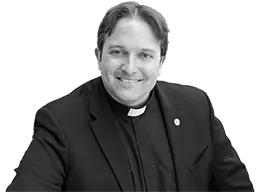
 Fr Matthew Charlesworth SJJesuit PriestSociety of JesusJesuit priest working in Southern AfricaFr. MatthewCharlesworthSJ
 Monday after Epiphany
Date: | Season: Christmas | Year: A
First Reading: 1 John 3:22–4
Responsorial Psalm: Psalm 2:7bc–8, 10
| Response: Psalm 2:8ab
Gospel Acclamation: Matthew 4:23
Gospel Reading: Matthew 4:12–17, 23–25
Preached at: the Chapel of Emmaus House in the Archdiocese of Harare, Zimbabwe.
Dear brothers and sisters in Christ, on this Monday after Epiphany the Church invites us to stay with the light a little longer. Yesterday we saw Christ revealed to the nations, recognised by people who came from far away and then went home changed. In these days leading to the Baptism of the Lord, the liturgy shows us what happens next. The light does not remain a moment of wonder. It moves outward. It enters public space. It begins to change how people live, decide, and treat one another.
The first reading from the First Letter of John is practical and demanding. John writes to believers who are trying to live faithfully in a confusing environment. He does not give them complex rules. He gives them a test. We receive what we ask, he says, when we keep God’s commandments and do what pleases him. Then he names the heart of it. Believe in Jesus Christ and love one another. These two cannot be separated. Faith that does not become love is hollow. Love that avoids truth does not last.
John also warns about voices that sound confident but lead people astray. Some spirits, he says, do not come from God. The test is not cleverness. The test is fruit. Does this way of thinking lead me to greater honesty, patience, and care, or does it make me defensive, dismissive, and hard. In Zimbabwe today, where people live with economic strain, rising prices, and constant uncertainty, this matters. We hear many explanations for why things are the way they are. John asks a simpler question. What is this doing to my heart.
The psalm speaks about authority. You are my child, today I have begotten you. Ask and I will give you the nations. These words were first spoken to kings, but they are not praise. They are instruction. Rule wisely. Learn restraint. In the Scriptures, power is always judged by how the vulnerable are treated. Whether power is exercised in government offices or family homes, it is meant to protect life, not diminish it.
The Gospel from Matthew brings the Epiphany light into ordinary geography. Jesus leaves Nazareth and settles in Capernaum, in the lands of Zebulun and Naphtali. Matthew is careful here. These were areas that had known invasion and loss centuries earlier. They were familiar with being overlooked. Isaiah had promised that light would appear there first.
Jesus’ opening words are brief. Repent, for the kingdom of heaven has come near. Repent means turn around. Change direction. Stop assuming that nothing can be different. This is often the lie of the Evil Spirit, that nothing can change. Instead, Jesus teaches, he walks, and he heals. Bodies worn down by illness and labour are restored. People are returned to work, to family, to community. That is why crowds come and bring those who cannot manage alone. The kingdom appears not as an idea, but as visible change.
Ignatius Loyola would invite us to notice where Matthew has left us standing. The Gospel pauses with Jesus in Galilee, by the Sea, before the next verses tell us whom he calls. So we remain on the shore. The light is lifting. Boats are being drawn in. Nets are laid out, still heavy from the night. People are tired and thinking about the day ahead. Into that ordinary scene, something begins to change. A man who has been pushed aside dares to use his body again. A woman who has learned not to expect attention is spoken to. Nothing dramatic is announced, yet lives begin to turn. This is how Matthew shows us that life can be changed, and is changed, when people take the risk of following Jesus.
As we move toward the Baptism of the Lord, we see the pattern clearly. The light revealed at Epiphany leads to a life of service. The Son who heals will soon stand in the Jordan with sinners and hear his mission named. Our own baptism places us on the same road, not toward comfort, but toward responsibility for one another.
So this morning, the invitation is simple and direct. Where am I being asked to turn. Which voice am I trusting. What small act of care or fairness is possible today, in this place, among these people.
I leave you with three questions for prayer.
- What choice today will show whether my faith is becoming love
- Which inner movement is leading me away from patience or honesty.
- What concrete good can I do today that I would otherwise postpone.
Source: https://sj.mcharlesworth.fr/homilies/2026-01jan-05-ya-ct-03/
This homily is shared for personal and pastoral use. Please attribute the author and do not alter the meaning when quoting. If you wish this homily to be translated - there is an option on the website which will allow you to translate it into the language of your choice.
Licenced under a Creative Commons Attribution-NonCommercial-NoDerivatives 4.0 International (CC BY-NC-ND 4.0) license.
The author does not speak for the Society of Jesus or for the Catholic Church.




In preparing this homily, I consulted various resources to deepen my understanding of today’s readings, including using Magisterium AI for assistance. The final content remains the responsibility of the author.