
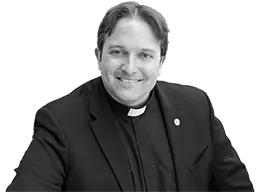
 Fr Matthew Charlesworth SJJesuit PriestSociety of JesusJesuit priest working in Southern AfricaFr. MatthewCharlesworthSJ
 Thursday of the 1st week in Ordinary Time
Date: | Season: Ordinary Time before Easter | Year: A
First Reading: 1 Samuel 4:1–11
Responsorial Psalm: Psalm 44:10–11, 14–15, 24–26
| Response: Psalm 44:27b
Gospel Acclamation: Matthew 4:23
Gospel Reading: Mark 1:40–45
Preached at: the Chapel of Emerald Hill Children’s Home in the Archdiocese of Harare, Zimbabwe.
Dear sisters in Christ, we have all known dry moments. Today’s readings use the image of the desert as the place where false hopes fall away and true mercy is revealed.
Our first reading from the first book of Samuel takes us to a battlefield thick with fear. Israel has already been defeated once. Instead of asking why, instead of turning their hearts back to the Lord, they fetch the Ark of the Covenant as if it were a weapon. The Ark, which held the memory of manna and the Law, becomes a charm to be carried rather than a covenant to be lived. The name of Eli’s grandson, Ichabod, soon gives voice to the truth: “Where is the glory?” The tragedy is not only that Israel loses the battle, but that they lose their sense of God’s living presence. They trust the symbol and forget the relationship.
This ancient failure still echoes today. In the land where these Scriptures were first spoken, fear continues to seek safety through force. Gaza’s suffering, Israel’s grief, and the tears of children show how often violence claims to be necessary. Yet violence offers a false promise. When security is sought without repentance, the Ark is carried into battle again. The Gospel will show us another way, where God does not save by force, but by standing with the wounded.
There is something painfully familiar here. We know the urge to carry holy things while avoiding holy change. We know the temptation to use God to protect our plans rather than allowing God to correct them. In the desert of defeat, Israel learns what we often learn the hard way: God cannot be managed. God is not luggage. God is Lord.
The psalm takes up that cry from the dust. It is the prayer of a people who feel abandoned. “Wake up, Lord. Why are you sleeping?” This is prayer spoken in desolation, without disguise. The psalmist lies flat on the ground and speaks plainly. Faith here is not certainty but stubborn hope. In the Spiritual Exercises, Ignatius teaches us to notice desolation without pretending it is consolation. The psalm does exactly that. It refuses false cheer. It stays with the truth, trusting that God listens even when God seems silent.
Many in our land know this prayer by heart. In Zimbabwe today, families face empty wallets, young people face closed doors, clinics lack medicine, and teachers wait months for pay. It is easy to feel that the glory has departed. The psalm gives us permission to say this aloud, not with bitterness but with trust. A faith that cannot complain cannot yet love.
The Gospel from the Gospel of Mark draws us deeper into the desert, but now the desert has a human face. A man with leprosy approaches Jesus. According to the law, he should not be there. The Book of Leviticus orders him to live outside the camp and to warn others of his uncleanness. He has learned to expect distance, stones, and silence. Yet he kneels and says one clear sentence: “If you want to, you can make me clean.”
Mark tells us that Jesus is moved from deep within. He stretches out his hand and touches him. This is not quick or safe healing. It is risky mercy. Jesus does not heal from a distance. He crosses the boundary. He shares the man’s exclusion. In that moment, the desert shifts. The man is restored to the community, and Jesus himself must remain outside in deserted places. The unclean man goes in. The Holy One stays out.
Jesus shows another way. He does not heal by domination, but by closeness. He does not secure himself by pushing the wounded further away. He steps outside the camp so that the excluded may come home.
Here we reach the heart of the Gospel. God does not save us by standing apart. God saves us by standing with. The desert becomes the place where God trades places with the wounded.
We can enter this scene in prayer. See the man’s skin. Hear the sharp intake of breath from the crowd. Watch the hand of Jesus move before anyone can stop it. Notice what stirs in you. Where do you step back? Where do you feel drawn closer?
This Gospel speaks directly to our common life. We still label people unclean. The unemployed graduate. The migrant at the border. The family in the informal settlement. Mercy today still has a cost. It may place us at the edge. It may disturb our order and slow our plans. Yet this is where Christ waits. Not at the centre of comfort, but outside the gate.
As we stand at this altar, the readings leave us with one quiet but searching question. Will we carry God like a charm, or will we follow God into the desert where mercy both wounds and heals?
Let us listen inwardly this evening, and ask ourselves:
- Where in my life am I holding on to holy things while avoiding a holy change?
- Who today needs me not to explain, but to reach out and touch?
- What small step will lead me into the desert where Christ already waits, wounded and healing, asking to be followed?
Source: https://sj.mcharlesworth.fr/homilies/2026-01jan-15-ya-ot-01/
This homily is shared for personal and pastoral use. Please attribute the author and do not alter the meaning when quoting. If you wish this homily to be translated - there is an option on the website which will allow you to translate it into the language of your choice.
Licenced under a Creative Commons Attribution-NonCommercial-NoDerivatives 4.0 International (CC BY-NC-ND 4.0) license.
The author does not speak for the Society of Jesus or for the Catholic Church.




In preparing this homily, I consulted various resources to deepen my understanding of today’s readings, including using Magisterium AI for assistance. The final content remains the responsibility of the author.