
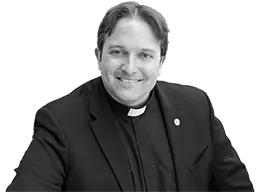
 Fr Matthew Charlesworth SJJesuit PriestSociety of JesusJesuit priest working in Southern AfricaFr. MatthewCharlesworthSJ
 Friday of the 1st week in Ordinary Time
Date: | Season: Ordinary Time before Easter | Year: A
First Reading: 1 Samuel 8:4–7, 10–22a
Responsorial Psalm: Psalm 89:16–19
| Response: Psalm 89:2
Gospel Acclamation: Luke 7:16
Gospel Reading: Mark 2:1–12
Preached at: the Chapel of Emerald Hill Children’s Home in the Archdiocese of Harare, Zimbabwe.
Sisters and dear friends, this morning the Word of God gives us one clear lesson: when we reach for control, God reaches for the heart.
Our first reading from the First Book of Samuel opens with a tired prophet and an anxious people. The elders of Israel come to Samuel with a simple request. Give us a king. They are weary of uncertainty. The judges are old. The future feels fragile. Other nations seem stronger because they have a ruler they can see and point to. Israel wants the same.
God’s reply is calm and unsettling. They are not rejecting you, Samuel. They are rejecting me as their king. The people are not wicked. They want safety, order, protection. But they want it on their own terms. They prefer something solid to lean on rather than the daily work of trust. Samuel is told to warn them plainly. A king will take. Sons for the army. Daughters for service. Fields, harvests, labour. The cost of power will be paid first by those with the least voice. Still the people insist. We want a king.
It is not hard to recognise ourselves here. Even in religious life, even after years of prayer, we can slip into this same desire. We look for structures, routines, or authority that will remove uncertainty. In Zimbabwe in 2025, many feel this deeply. When prices rise, when medicines are scarce, when young people finish school with no work waiting, the longing for a strong solution is understandable. But the reading presses a quieter question. Where do I finally place my trust when the ground feels unsteady?
The psalm we pray today answers this question. Blessed the people who walk in the light of your face, O Lord. Power here looks different. God is not the one who takes but the one who lifts. You are the glory of their strength. This is authority that steadies rather than dominates, strength that does not frighten the weak. The psalm teaches us that trust rooted in God may feel less dramatic, but it endures.
The Gospel from Mark brings us into a crowded house in Capernaum. Jesus is teaching. The doorway is blocked. A paralysed man arrives, carried by four friends. They do not argue with the crowd. They do not wait for a better moment. They climb onto the roof and lower him down. It is practical faith. Costly faith. Faith that is desperate and genuine.
Jesus looks at the man and speaks words no one expects. Child, your sins are forgiven. Jesus deals first with what cannot be seen, because that is where the deeper damage lies. The scribes object silently. Only God can forgive sins. They are right. And Jesus does not retreat from that truth. He makes it visible. Get up, pick up your mat, and go home. The man rises. What once carried him is now carried by him. Forgiveness gives him back his life and his place in the world.
This Gospel is very concrete. The man does not heal himself. He is carried. The faith of his friends matters. In Ignatian prayer, we are often invited to step inside the scene. This morning, imagine the weight of that stretcher. The careful steps on the roof. The silence as he is lowered down. Ask simply, who has carried me when I could not move forward? And whom am I being asked to carry now?
For Dominican sisters, this speaks quietly but firmly. Your teaching, your listening, your patient formation of minds and hearts are meant to clear a way for others to be brought to Christ. Sometimes that means breaking open a roof, finding a new way to reach a child who cannot hear, or an orphan who has learned not to hope. Sometimes it means steady faithfulness in lecture halls, staff rooms, and long days of repetition that no one applauds. In schools, clinics, universities, parishes, and families, there are many forms of paralysis. Fear. Poverty. Trauma. Fatigue. Loss of confidence. The Gospel does not ask you to fix everything. It asks you to carry people to Jesus and trust Him to do what only He can do.
As this day begins, let us hold these questions gently before the Lord.
- Where am I clinging to control instead of trust?
- Whom is God asking me to carry today, patiently and without recognition?
- What might change if I believed that forgiveness is the deepest healing God wants to give me this morning?
Source: https://sj.mcharlesworth.fr/homilies/2026-01jan-16-ya-ot-01/
This homily is shared for personal and pastoral use. Please attribute the author and do not alter the meaning when quoting. If you wish this homily to be translated - there is an option on the website which will allow you to translate it into the language of your choice.
Licenced under a Creative Commons Attribution-NonCommercial-NoDerivatives 4.0 International (CC BY-NC-ND 4.0) license.
The author does not speak for the Society of Jesus or for the Catholic Church.




In preparing this homily, I consulted various resources to deepen my understanding of today’s readings, including using Magisterium AI for assistance. The final content remains the responsibility of the author.