
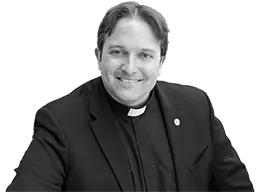
 Fr Matthew Charlesworth SJJesuit PriestSociety of JesusJesuit priest working in Southern AfricaFr. MatthewCharlesworthSJ
 Memorial of St Anthony, Abbot
Date: | Season: Ordinary Time before Easter | Year: A
First Reading: 1 Samuel 8:4–7, 10–22a
Responsorial Psalm: Psalm 89:16–19
| Response: Psalm 89:2
Gospel Acclamation: Luke 7:16
Gospel Reading: Mark 2:1–12
Preached at: the Chapel of Emerald Hill Children’s Home in the Archdiocese of Harare, Zimbabwe.
God meets us where we are and asks us to follow him in the middle of ordinary life.
Dear sisters, the readings today remind us of something simple and important. God does not wait for the right mood, the right time, or the right circumstances. He comes to people while they are busy, tired, and dealing with everyday tasks.
In the first reading from the First Book of Samuel, Saul is not thinking about God’s plans. He is looking for his father’s lost donkeys. He walks from place to place and finds nothing. It is boring, frustrating work. There is nothing holy about it on the surface. And yet it is through this failed search that God leads Saul to Samuel.
Saul comes from the smallest tribe of Israel. He does not put himself forward and does not even know who Samuel is when they meet. Still, God has already chosen him. Samuel pours oil on Saul’s head and tells him that the Lord has anointed him. Saul does not yet understand what this will mean. We also know that he will later struggle and make serious mistakes. But God begins with trust. God works with real people, not ideal ones.
The psalm we pray this morning helps us see what kind of trust God desires. The king rejoices not because of his own ability, but because the Lord has given him strength. “For the king trusts in the Lord, and through the steadfast love of the Most High he shall not be moved.” This is a good reminder for those of us in religious life. What bears fruit in us is not constant effort or self-reliance, but staying faithful to prayer and to God, even when we feel weak or discouraged.
The Gospel from Mark continues to give another ordinary scene. Jesus sees Levi sitting at his tax desk. Levi belongs to a group that everyone despised. Tax collectors worked for the Roman occupiers and often took more money than they should. They were seen as dishonest and as traitors to their own people. Most religious people avoided them.
Jesus does not avoid Levi. He looks at him and says, “Follow me.” That is all. Levi gets up and leaves his job behind. He does not first change his life or explain himself. He simply responds.
Later, Jesus eats in Levi’s house with other tax collectors and sinners. This causes scandal. In that culture, eating together meant accepting one another. When people question Jesus, he answers clearly. “Those who are well do not need a doctor, but the sick do.” Jesus does not deny that people are sinful. He shows that healing can only happen when people are met where they are.
This matters for us in community life. Living together day after day shows us one another’s limits as well as our strengths. The Gospel challenges us to choose patience rather than judgement, understanding rather than distance, especially when it would be easier to withdraw.
On this day we remember Saint Anthony, Abbot, whose life asks us an uncomfortable question. What do we rely on for security? Anthony gave up property, status, and control. He chose a life that offered no guarantees. In the desert, he learned discipline, humility, and freedom. His example reminds us that religious life only bears fruit when we allow God to loosen our grip on what makes us feel safe.
Ignatian prayer asks us to place ourselves in the Gospel scenes. We might imagine Saul walking from village to village, tired and disappointed. We might imagine Levi standing up and leaving his desk behind. We might imagine Jesus sitting at table with people others avoid. Where do we see ourselves?
In our own country, many people live with uncertainty and financial strain. The Church is called to be present in quiet, practical ways. Faithfulness, listening, and small acts of care matter more than grand words.
God continues to call ordinary people. He asks for trust, not perfection.
As you pray this morning, you might reflect on these questions.
- Where in my daily routine might God be asking something of me?
- Who am I finding difficult to meet with patience and understanding in community life?
- What small change is Jesus inviting me to make when he says, “Follow me”?
Source: https://sj.mcharlesworth.fr/homilies/2026-01jan-17-ya-ot-01/
This homily is shared for personal and pastoral use. Please attribute the author and do not alter the meaning when quoting. If you wish this homily to be translated - there is an option on the website which will allow you to translate it into the language of your choice.
Licenced under a Creative Commons Attribution-NonCommercial-NoDerivatives 4.0 International (CC BY-NC-ND 4.0) license.
The author does not speak for the Society of Jesus or for the Catholic Church.





In preparing this homily, I consulted various resources to deepen my understanding of today’s readings, including using Magisterium AI for assistance. The final content remains the responsibility of the author.