
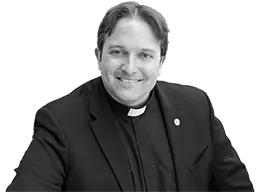
 Fr Matthew Charlesworth SJJesuit PriestSociety of JesusJesuit priest working in Southern AfricaFr. MatthewCharlesworthSJ
 Memorial of Sts. John Ogilvie, Stephen Prongracz, Melchior Grodziecki; Bl. Ignatius de Azevedo, James Sales and William Saultemouche
Date: | Season: Ordinary Time before Easter | Year: A
First Reading: 1 Samuel 15:16–23
Responsorial Psalm: Psalm 50:8–9, 16b–17, 21, 23
| Response: Psalm 50:23b
Gospel Acclamation: Hebrews 4:12
Gospel Reading: Mark 2:18–22
Preached at: the Chapel of Emmaus House in the Archdiocese of Harare, Zimbabwe.
Think of a wedding you have actually attended. Not the photographs, but the moment itself. People are talking, distracted, checking watches. Then the groom appears. No announcement is needed. Conversations fade. Faces turn. Something important has arrived. No one wonders whether this is the right time for restraint. Presence settles the matter.
That is the scene behind today’s Gospel. People notice that John’s disciples fast. The Pharisees fast. Fasting, after all, is a serious sign of commitment to God. So why do Jesus’ disciples not do the same? Jesus answers with a simple image. When the bridegroom is present, the attendants do not fast. They rejoice. Fasting will come later, when the bridegroom is no longer seen.
Jesus is not rejecting discipline. He is putting it in its proper place. The issue is not whether fasting is good, but whether our practices help us listen to God or allow us to hide from him. Religion can harden into a set of actions that feel safe, while the heart remains untouched. Jesus insists that faith begins with presence and relationship, not performance.
He presses the point further. No one patches an old garment with new cloth. No one pours new wine into old skins. Something will tear. Something will burst. What he brings cannot simply be judged by inherited habits or older ways of thinking. His way demands a deeper change, an interior freedom shaped by love.
The first reading shows what happens when that freedom is lost. Saul defeats the Amalekites, but then helps himself to the spoils. He wraps greed in religious language, claiming the animals are for sacrifice. Samuel refuses to accept the excuse. Obedience is better than sacrifice. Listening matters more than ritual. Saul’s failure is not about military success. It is about placing his own will above God’s.
The Amalekites are named here, and this matters. This passage has sometimes been pulled out of its context and used to justify violence, even in our own time. We have heard modern leaders, including Benjamin Netanyahu, use Amalek language to stir fear and frame war as sacred duty. Scripture then becomes a weapon. Yet the wider witness of Scripture is clear. God sides with the widow, the orphan, and the stranger. God condemns the misuse of religion to protect power or territory. Jesus seals this teaching by refusing violence and by giving his life rather than taking another’s.
This is why the Church begins this week praying for Christian unity. Division often begins when we cling to our own certainties and stop listening. Unity grows not from uniformity or force, but from shared obedience to Christ, who calls all his disciples to mercy, humility, and peace.
The Jesuit martyrs we remember today lived by a very different reading of God’s will. What Ignatius called indifference was not coldness, but freedom. Through the Spiritual Exercises, they learned not to cling to life over death, safety over danger, success over failure, but to desire only what led them closer to God’s service and the good of others.
John Ogilvie moved quietly through Scotland, knowing he might not live long, yet refusing to abandon people who depended on him. In Košice, Stephen Pongrácz, Melchior Grodziecki, and Mark of Križevci stayed when escape was possible, choosing fidelity over self protection. Ignatius de Azevedo and his companions accepted the sea, the pirates, and death itself, so long as God’s work went forward. James Salès and William Saultemouche returned again and again to dangerous places, free enough not to secure their own future.
Their fasting was not mainly from food. It was a fasting from control, from fear, from the need to be safe at all costs. They became new wineskins because they allowed God to stretch them.
This still questions us. We live in a world quick to justify harm with holy language, quick to protect our own group, slow to listen. We can pile up religious actions and still refuse God’s call to mercy and justice. New wine still presses against old skins, including our own.
Jesus does not ask us to abandon prayer, fasting, or devotion. He asks that they make us free. God does not need to be persuaded by our sacrifices. God is already speaking, especially through the poor, the stranger, the wounded of every war. The real question is whether we are willing to hear, and to obey.
As we pray with this Gospel in the Ignatian way, three questions may stay with us this week.
- Where might I be using religion to justify fear or self interest rather than listening to God?
- What would Ignatian freedom look like in my response to conflict and suffering today?
- If obedience truly mattered more than sacrifice, what would I need to change in my daily choices?
Source: https://sj.mcharlesworth.fr/homilies/2026-01jan-19-ya-ot-02/
This homily is shared for personal and pastoral use. Please attribute the author and do not alter the meaning when quoting. If you wish this homily to be translated - there is an option on the website which will allow you to translate it into the language of your choice.
Licenced under a Creative Commons Attribution-NonCommercial-NoDerivatives 4.0 International (CC BY-NC-ND 4.0) license.
The author does not speak for the Society of Jesus or for the Catholic Church.





In preparing this homily, I consulted various resources to deepen my understanding of today’s readings, including using Magisterium AI for assistance. The final content remains the responsibility of the author.