
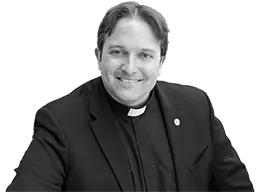
 Fr Matthew Charlesworth SJJesuit PriestSociety of JesusJesuit priest working in Southern AfricaFr. MatthewCharlesworthSJ
 Memorial of St Agnes, virgin and martyr
Date: | Season: Ordinary Time before Easter | Year: A
First Reading: 1 Samuel 17:32–33, 37, 40–51
Responsorial Psalm: Psalm 144:1b, 2, 9–10
| Response: Psalm 144:1
Gospel Acclamation: Matthew 4:23
Gospel Reading: Mark 3:1–6
Preached at: the Chapel of Emmaus House in the Archdiocese of Harare, Zimbabwe.
At the end of most days, our hands tell the truth about us. They show where we have spent our time and what we have chosen to do. They have worked and waited, helped and held back, reached out or stayed closed. Sometimes they are ready for good. Sometimes they are tired. Sometimes they have learned not to act at all.
In the synagogue today, Jesus brings a man forward whose hand no longer works. He does not leave him where he is. He puts him in the middle, where no one can ignore him. Then Jesus asks a question that corners everyone listening. Is it lawful to do good or to do harm, to save life or to kill? No one answers. Not because the answer is hard, but because answering would cost them their control.
Jesus looks at them with anger and grief. Not anger at disagreement, but grief that rules matter more to them than a human being. He turns to the man and says, Stretch out your hand. The man does. The hand is restored. What was useless works again. But the leaders walk out and begin to plan how to destroy Jesus. A wounded man is healed, and at the same moment other hands begin to work for harm.
This scene has a long history behind it (cf. 1 Kings 13:1-10). In Israel’s past, King Jeroboam once stretched out his hand in anger against a man of God, and his hand withered. When it was healed, he asked for relief but refused to change. He went straight back to false worship and misuse of power. His hand recovered, but his heart did not. That is the warning running under today’s Gospel. Healing that does not lead to conversion leaves us unchanged.
The first reading gives us a different picture. David steps forward when everyone else steps back. He is young, untrained, and dismissed. His hands have held sheep, not weapons. Yet he says to Saul, The Lord who saved me will save me again. One stone, thrown in trust, brings down the giant who had paralysed an entire army. God does not depend on strength as the world understands it. God works through hands that are willing to act.
The psalm makes it plain. Blessed be the Lord, my rock, who trains my hands for battle. Not the battle of force, but the struggle to do what is right when fear would keep us still.
Today we also remember St Agnes of Rome, a young girl, hardly more than a child, with no power and no protection. By the world’s standards, she was weak. Yet she refused to give herself to anything but Christ. Threats did not move her. Promises did not distract her. She remained steady. Her constancy confounded the strong, just as the opening prayer of this feast says it would.
That prayer names the pattern of God’s work without softening it. God chooses what is weak in the world to confound the strong. A shepherd boy with a sling. A man with a useless hand. A young martyr with nothing to bargain with. God does not wait for strength to appear before acting. He works through trust, through faithfulness, through people who refuse to let fear decide who they are.
This is not distant from our lives. In Zimbabwe today, many hands are worn down by survival. Some are tied by poverty. Some hesitate because speaking the truth carries a price. Some are tempted to protect themselves first and ask questions later. The Gospel steps straight into this reality and asks us the same question Jesus asked in the synagogue. Will we use our hands only to preserve ourselves, or will we risk doing good when it unsettles the order we rely on?
As we come to the altar and stretch out our hands to receive the Body of Christ, we ask for more than comfort. We ask for courage. We ask that what is stiff in us may loosen, that what is fearful may learn to trust, that our hands may be trained not for harm, but for life.
So let these questions stay with us today.
- Where have my hands grown slow or closed because fear feels safer than love?
- What is Christ asking me to stretch out this week, even if I would rather keep it hidden?
- Whose wounded hands am I being asked to notice and support, especially among those who are easily ignored?
Source: https://sj.mcharlesworth.fr/homilies/2026-01jan-21-ya-ot-02/
This homily is shared for personal and pastoral use. Please attribute the author and do not alter the meaning when quoting. If you wish this homily to be translated - there is an option on the website which will allow you to translate it into the language of your choice.
Licenced under a Creative Commons Attribution-NonCommercial-NoDerivatives 4.0 International (CC BY-NC-ND 4.0) license.
The author does not speak for the Society of Jesus or for the Catholic Church.



In preparing this homily, I consulted various resources to deepen my understanding of today’s readings, including using Magisterium AI for assistance. The final content remains the responsibility of the author.