
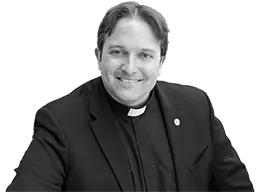
 Fr Matthew Charlesworth SJJesuit PriestSociety of JesusJesuit priest working in Southern AfricaFr. MatthewCharlesworthSJ
 Memorial of St Thomas Aquinas, priest and doctor of the Church
Date: | Season: Ordinary Time before Easter | Year: A
First Reading: 2 Samuel 7:4–17
Responsorial Psalm: Psalm 89:4–5, 27–30
| Response: Psalm 89:29a
Gospel Acclamation: The seed is the word of God, Christ is the sower; all who come to him will live for ever.
Gospel Reading: Mark 4:1–20
Preached at: the Chapel of Emmaus House in the Archdiocese of Harare, Zimbabwe.
Most of us know the feeling of arriving before God with a plan already drawn. We come with measurements and materials in our heads. Fix this. Bless that. Help me build what I think should stand. The readings today slow that instinct. They invite us to listen before we build, to receive before we decide, to let God shape us before we offer Him our designs.
David looks around and notices the gap. He lives in a palace of cedar. Cedar is not local timber. It is imported, expensive, long lasting. It smells of success. It says we have arrived. Israel is no longer wandering. The people who once moved with flocks and tents are settling. Borders are firming up. Power is gathering in one place. A palace makes sense.
And then David remembers where God lives. In a tent.
That tent is not an embarrassment from the past. It carries memory. For generations God travelled with the people. Folded up and carried. Set down and raised again. The tent said God moves when we move. God stays close when life is exposed and uncertain. God shares the life of people who do not yet know where they will sleep next season.
So when David offers to build God a house of cedar and stone, it is more than kindness. It marks a change in how people imagine God. From companion on the road to resident king. From presence among the people to presence safely housed above them. God’s answer is gentle but clear. I never asked for a building. I walked with you. I lived where you lived. And now that you are settled and strong, remember this. I am not a trophy of your success. I am the God who goes with my people.
Instead of a building, God promises a living future. A house made of people, not walls. A promise that breathes and endures even when stones fall. Grace before project. Gift before effort.
The psalm rests in that promise. My love will stand firm. Even when people fail. Even when power shifts. Even when sons wander. God does not pack up and leave. He keeps faith. He keeps sowing.
Jesus takes that same truth to the lakeside. He speaks of a farmer who throws seed everywhere. On the path. On rock. Among thorns. Into good soil. He is not careful. He is generous. The seed is always good. What changes is the ground.
Some ground is hard, packed down by disappointment or routine. Some is shallow, eager at first but unable to hold moisture when the heat comes. Some is crowded with thorns, worries about money, health, reputation, the future. And some, quietly, lets the seed sink in and do its slow work.
Jesus is not scolding. He is describing us. In a small Jesuit community. In Zimbabwe, where many live between movement and settlement, between hope and strain. Young people searching for work. Families stretched thin. Elders carrying long memories. The temptation is either to harden ourselves for protection, or to cover everything with quick enthusiasm that cannot last. Yet Jesus keeps sowing. He has not given up on the field.
Today we remember St Thomas Aquinas. He is often remembered for his sharp mind and thick books. But at heart, Thomas was a listener. He prayed long before he wrote. He believed that reason matters, but only when it kneels. Near the end of his life he said that what he had written felt small next to what God had shown him. He had learned that God cannot be housed, not in buildings, not even in correct ideas. Truth, like a tent, must remain open to the journey.
That is close to Ignatian wisdom. Pay attention to what moves within you as the Word is spoken. Where does it soften you. Where does it close you. God works there, breaking up hard ground, deepening shallow soil, pulling thorns one by one.
David learned that God does not need his palace. The disciples learned that hearing is more than sound. We are learning that fruit comes not from control, but from trust. God is still the God of the tent, still closest to those who are exposed, moving, waiting.
As we come to the altar, we bring whatever ground we are today. God is not asking for a finished building. He is asking for room to pitch His tent.
As we pray this morning, we might sit with three simple questions.
- Where is God asking me to listen rather than to build.
- What has hardened, thinned, or crowded my heart, and what might I gently place before Him.
- If the Word were to grow through me for the good of others, especially those who live without much security, what small fruit could it bear this week.
Source: https://sj.mcharlesworth.fr/homilies/2026-01jan-28-ya-ot-03/
This homily is shared for personal and pastoral use. Please attribute the author and do not alter the meaning when quoting. If you wish this homily to be translated - there is an option on the website which will allow you to translate it into the language of your choice.
Licenced under a Creative Commons Attribution-NonCommercial-NoDerivatives 4.0 International (CC BY-NC-ND 4.0) license.
The author does not speak for the Society of Jesus or for the Catholic Church.





In preparing this homily, I consulted various resources to deepen my understanding of today’s readings, including using Magisterium AI for assistance. The final content remains the responsibility of the author.