
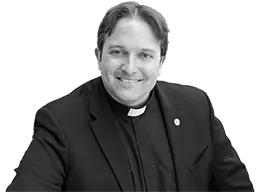
 Fr Matthew Charlesworth SJJesuit PriestSociety of JesusJesuit priest working in Southern AfricaFr. MatthewCharlesworthSJ
 Thursday of the 3rd week in Ordinary Time
Date: | Season: Ordinary Time before Easter | Year: A
First Reading: 2 Samuel 7:18–19, 24–29
Responsorial Psalm: Psalm 132:1–5, 11–14
| Response: Psalm 1:32b
Gospel Acclamation: Psalm 119:105
Gospel Reading: Mark 4:21–25
Preached at: the Chapel of Emmaus House in the Archdiocese of Harare, Zimbabwe.
David walks into the tent and sits on the ground. He is still king, but something has shifted. God has just spoken of a future that will last longer than David’s strength and longer than his life. David does not try to respond with big words. He does not make promises of his own. He simply sits there and says, “Who am I, Lord God?” It sounds like a man who has been stopped in his tracks by kindness.
David sees clearly now. All his planning, his fighting, his building have brought him this far, but they are not the centre of the story. God is. What God has promised will continue without David’s management. David’s part is not to hold it together, but to stay grateful and open.
The psalm carries the same feeling. David speaks of restless nights, of refusing comfort until God has a place among the people. We recognise that restlessness. We know the habit of lying awake, turning over problems in our heads. Finances. Health. The future of the country. The Church. We keep thinking that once we fix enough things, then we will rest. The psalm suggests something simpler. Rest comes when God is not pushed to the edge of our lives.
Jesus then offers an image anyone can picture. A lamp in a dark room. You light it so you can see where you are going. You do not hide it under a bowl. That would be pointless. Light only helps when it is allowed to shine.
Then Jesus adds a sentence that cuts through excuses. The measure you use will be the measure you receive. This is not a warning shouted from a distance. It is an observation. When we give the bare minimum, our lives shrink. When we give freely, something in us opens. Light does not run out because it is shared.
This matters here and now. In Zimbabwe, many people are worn out. There are long queues, empty shelves, unpaid fees, quiet worries carried home at night. It is understandable to want to hold back, to protect what little energy and hope we have left. Even in religious life, the instinct can be to stay small and careful. But the Gospel tells us plainly that light dies when it is covered up. It stays alive when it is allowed air.
Think of a simple oil lamp. If you never tend it, it smokes and dims the room. If you trim the wick and add oil, the flame steadies and gives clear light. Giving does not destroy the flame. Neglect does.
Ignatius would invite us to pause with that image. To picture the lamp in our own hands. To notice where we usually put it. On the table, where others might see it, or under the bowl, where it costs us less. And to notice our reaction. The fear of being drained. Or the quiet freedom that comes with letting go.
David ends his prayer by asking for one thing. That God keep God’s word. Not that David succeed. Not that he be remembered well. Only that God be faithful, and that he himself not close his hands.
That is what ties these readings together. God gives the promise. God lights the lamp. Our work is not to control the future, but to trust the light enough to let it show.
Let us ponder these questions in prayer this morning:
- Where is there light in my life that I tend to cover up because sharing it feels like too much effort?
- When I give my time and attention, am I holding back or offering it honestly?
- And when I meet people this week who are tired or overlooked, what small act would lift the light for them?
Source: https://sj.mcharlesworth.fr/homilies/2026-01jan-29-ya-ot-03/
This homily is shared for personal and pastoral use. Please attribute the author and do not alter the meaning when quoting. If you wish this homily to be translated - there is an option on the website which will allow you to translate it into the language of your choice.
Licenced under a Creative Commons Attribution-NonCommercial-NoDerivatives 4.0 International (CC BY-NC-ND 4.0) license.
The author does not speak for the Society of Jesus or for the Catholic Church.



In preparing this homily, I consulted various resources to deepen my understanding of today’s readings, including using Magisterium AI for assistance. The final content remains the responsibility of the author.