
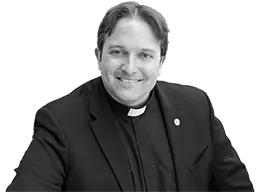
 Fr Matthew Charlesworth SJJesuit PriestSociety of JesusJesuit priest working in Southern AfricaFr. MatthewCharlesworthSJ
 Memorial of St. John de Brito, Priest; Bl. Rudolph Acquaviva, Priest, and Companions, Martyrs
Date: | Season: Ordinary Time before Easter | Year: A
First Reading: 2 Samuel 24:2, 9–17
Responsorial Psalm: Psalm 32:1–2, 5–7
| Response: Psalm 32:5c
Gospel Acclamation: John 10:27
Gospel Reading: Mark 6:1–6
Preached at: the Chapel of Emerald Hill Children’s Home in the Archdiocese of Harare, Zimbabwe.
Dear sisters,
The people in Nazareth thought they knew Jesus. They knew his family. They knew his trade. They remembered him as the carpenter who grew up among them. So when he spoke with wisdom and authority in the synagogue, they did not open themselves to what God might be doing. They closed in on what they already knew. They asked, not What is happening here? but Who does he think he is? Their familiarity became a refusal.
That same pattern runs through all the readings today. It is not loud rejection of God. It is quieter than that. It is the habit of relying on what we can see, count, and manage, while missing what God is asking of us.
In the first reading, David orders a census. He wants numbers. He wants certainty. How many soldiers are there. How secure are we really. There is no immediate danger. This is not careful leadership. It is unease looking for reassurance. Joab senses that something is wrong and tries to dissuade him, but David insists.
When the census is complete, David realises what he has done. He sees that his trust has shifted. He has moved from relying on God to relying on figures. He has begun to treat people as assets rather than as lives placed in his care. What matters is his response. He does not explain himself. He does not dilute responsibility. He says, I have sinned. I alone have done wrong. These people are sheep. Let the punishment fall on me.
When David is offered a choice of punishment, he says, Let us fall into the hands of the Lord, for his mercy is great. David knows what human power looks like when it is unchecked. He also knows that God’s judgement is never separated from mercy. God does not destroy for the sake of destruction.
The plague stops at the threshing floor, a place where grain is separated from what cannot sustain life. It is there that the destruction ends. Later, that same place will become the site of the Temple. God chooses to dwell where truth has been faced and pride has been undone.
The psalm speaks plainly. Happy are those whose sin is forgiven. When I acknowledged my sin to you, you forgave the guilt of my sin. There is no drama here. Only honesty and relief. God becomes a place of safety, not because we are strong, but because we stop hiding.
In the Gospel, the failure is not lack of understanding. The people recognise Jesus’ wisdom. They see that something real is happening. But they will not trust him. He is too close to them. Too ordinary. And Mark says something stark. Jesus could work no mighty deed there. Not because he was powerless, but because faith is what allows God’s work to take root. Jesus does not compel belief. He is amazed, not at their questions, but at their refusal.
This should make us attentive. We live close to Scripture. We hear it daily. We know the shape of prayer and community life. And without noticing, we can stop listening. God may be speaking through a sister we avoid, through work that feels routine, through needs beyond our enclosure. Familiarity can make us inattentive.
This is not only a personal issue. It is a social one. When people are reduced to numbers, prices, or statistics, trust gives way to control. Zimbabwe has lived with the consequences of this. The Gospel keeps returning us to the same truth. People are not figures to be managed. They are lives to be received.
Today we remember John de Brito, Rudolph Acquaviva, and their companions. They did not remain where things were secure or known. They learned new languages. They lived among people who were not their own. They trusted God more than their safety. They did not soften the Gospel to make it easier to live with. They accepted the cost of fidelity. Their witness asks us whether we still allow the Gospel to place demands on us.
Jesus says, My sheep hear my voice. The question is not whether he speaks. The question is whether we are willing to listen, especially when his voice comes to us through what is ordinary and close at hand.
So let us take these questions into prayer today.
- Where am I relying on habit or control instead of trust in God?
- Whose voice am I ignoring because it is too familiar to me?
- What concrete act of trust is God asking of me now?
Lord, teach us to listen. Amen.
Source: https://sj.mcharlesworth.fr/homilies/2026-02feb-04-ya-ot-04/
This homily is shared for personal and pastoral use. Please attribute the author and do not alter the meaning when quoting. If you wish this homily to be translated - there is an option on the website which will allow you to translate it into the language of your choice.
Licenced under a Creative Commons Attribution-NonCommercial-NoDerivatives 4.0 International (CC BY-NC-ND 4.0) license.
The author does not speak for the Society of Jesus or for the Catholic Church.





In preparing this homily, I consulted various resources to deepen my understanding of today’s readings, including using Magisterium AI for assistance. The final content remains the responsibility of the author.