
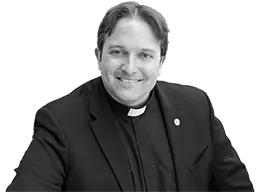
 Fr Matthew Charlesworth SJJesuit PriestSociety of JesusJesuit priest working in Southern AfricaFr. MatthewCharlesworthSJ
 Memorial of St Agatha, virgin and martyr
Date: | Season: Ordinary Time before Easter | Year: A
First Reading: 1 Kings 2:1–4, 10–12
Responsorial Psalm: 1 Chronicles 29:10–11b, 11d–12d
| Response: 1 Chronicles 29:12b
Gospel Acclamation: Mark 1:15
Gospel Reading: Mark 6:7–13
Preached at: the Chapel of Emmaus House in the Archdiocese of Harare, Zimbabwe.
David is near the end of his life, and he speaks out of experience rather than ambition. He tells Solomon what his own failures have taught him. Stay close to God. Walk in his ways. Be faithful from the inside, not just on the surface. David has learned that strength is not about holding on to power, but about staying true when it would be easier not to.
David’s life was not exemplary. He committed serious sins and lived with their consequences. But he did not hide from them. He turned back to God and trusted mercy more than his own record. Now, as he hands over the kingdom, he does not pass on control or certainty. He passes on responsibility. If the king stays faithful, the people will flourish. If he does not, things will fall apart. David knows this from experience.
The psalm lets us overhear David praying in public at the end of his life. Yours, O Lord, are greatness and power. Everything comes from you. What we have is not something we earned or can protect forever. It is received. Even our generosity is only a return of what was first given to us. This prayer grows out of humility, not fear. It is faith that has been tested and stripped back. Give me only your love and your grace, that is enough for me.
In the Gospel, Jesus sends the Twelve out to do what they have seen him do. He does not load them down. No money. No food. No spare clothes. Just a staff and the company of one another. A staff is what a traveller leans on. It is a sign that they are not meant to rely on themselves. They are to speak plainly, call people back to God, free those caught in destructive forces, and care for the sick with oil and touch. They are to place their trust in God, not in pride, honour, or riches.
Jesus is making something clear. God’s work is not driven by stockpiling or control. It moves through trust. Authority in the Kingdom does not push down. It lifts up. It restores people to themselves.
The Gospel does not pretend that this way of trust is easy or safe. To speak truth, to heal, and to call people back to life always carries a cost. Healing and freedom do not come from offering comfort, but from truth spoken clearly and lives given honestly. Life is poured out, not hoarded, and it bears fruit only when it is shared.
In parts of Scandinavia there is a practice known as death cleaning. As people grow older, they begin to clear out what they no longer need, not out of fear, but out of care. They want to leave behind less clutter and fewer burdens for those who come after them. In a quiet way, David is doing something similar here. He is clearing away illusions about power and success and leaving Solomon with what matters. Jesus asks the same of his disciples. Travel light. Let go of what distracts you. Make room for trust.
Just as the disciples are sent without protection or guarantee, Agatha lived the same pattern. She had no power to shield herself and no influence to fall back on. She could have saved herself by giving in, but she chose not to. Her body was harmed, but her freedom was not taken. In her suffering, God did not abandon her. The strength she received came not through force, but through faith. She shows us how God works through those who appear weakest.
This speaks clearly to places of uncertainty like our own. Many people live with limited options and fragile security. It is tempting to cling to whatever gives a sense of control. Jesus sends his disciples into a world like this and asks them to depend on God working through ordinary people. That dependence is not weakness. It is how community grows and dignity is respected.
Ignatius would ask us to stay with this scene for a moment. Walk with the disciples. Notice what you are carrying that you do not need. Notice what makes you anxious. And listen for what Jesus asks you to trust him with.
David trusted God at the end of his life. The disciples trusted Jesus at the beginning of theirs. Agatha trusted God when everything else was taken away. The same Christ sends us now, not because we are ready, but because we are willing.
As we move into the week, take these questions into prayer.
- What am I holding onto that makes it harder to trust God?
- Where am I being asked to rely on others rather than myself?
- Who might God be asking me to serve, if I let go of some of my need for control?
Source: https://sj.mcharlesworth.fr/homilies/2026-02feb-05-ya-ot-04/
This homily is shared for personal and pastoral use. Please attribute the author and do not alter the meaning when quoting. If you wish this homily to be translated - there is an option on the website which will allow you to translate it into the language of your choice.
Licenced under a Creative Commons Attribution-NonCommercial-NoDerivatives 4.0 International (CC BY-NC-ND 4.0) license.
The author does not speak for the Society of Jesus or for the Catholic Church.





In preparing this homily, I consulted various resources to deepen my understanding of today’s readings, including using Magisterium AI for assistance. The final content remains the responsibility of the author.