
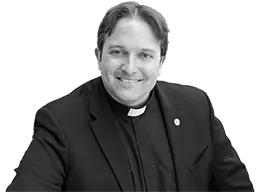
 Fr Matthew Charlesworth SJJesuit PriestSociety of JesusJesuit priest working in Southern AfricaFr. MatthewCharlesworthSJ
 Memorial of St Scholastica, virgin
Date: | Season: Ordinary Time before Easter | Year: A
First Reading: 1 Kings 8:22–23, 27–30
Responsorial Psalm: Psalm 84:3–5, 10–11
| Response: Psalm 84:2
Gospel Acclamation: Psalm 119:36, 29b
Gospel Reading: Mark 7:1–13
Preached at: the Chapel of Emmaus House in the Archdiocese of Harare, Zimbabwe.
Brothers and sisters,
Solomon stands in front of everyone and prays with empty hands. He has just finished building the Temple, the biggest and most important building in Israel. It would have been easy for him to feel proud, to feel powerful, to think that God now belonged to them. Instead, Solomon says something very honest. God is too big to fit inside any building. Even the sky is not big enough for God. So why build the Temple at all? Because God chooses to be close, not because God can be locked into a place.
That truth keeps faith real. God is close, but never owned. God is faithful, but never controlled. The Temple is a sign of relationship, not a guarantee. Solomon knows how easily people can slip into thinking, If we pray here, if we do the right religious things, God has to help us. So he prays out loud so everyone hears it clearly. God listens, yes, but the people still have to live rightly. Prayer and life have to match.
The psalm carries the same feeling. My heart longs for the house of the Lord. One day there is better than a thousand elsewhere. Not because the building is impressive, but because God is near. Then comes a gentle surprise. Even the sparrow finds a home there. Not the strong or important, but the small and easily missed. God’s space is where people are welcomed, not judged.
In the Gospel, some religious leaders arrive and begin to watch Jesus closely. They notice that his disciples do not wash their hands according to the traditions. These traditions were not foolish. Many began as practical ways to stay healthy and to remember God in everyday life. But over time, the observance of the rules grew heavier, and attention to people’s real needs faded.
Jesus speaks plainly. You can look religious on the outside and still be far from God on the inside. You can say the right prayers, follow the rules, and still miss what God truly desires. God is more interested in what comes from the heart than in what can be seen.
Jesus gives an example that is hard to ignore. Some people used religious excuses to avoid caring for their parents. They said their money was set aside for God while keeping it for themselves. Religion became a way of avoiding love. Jesus names this clearly. What looked like faithfulness was really self-protection.
Today the Church also remembers St Scholastica, who understood this deeply. She did not argue with her brother Benedict using rules or authority, but trusted prayer and relationship. When Benedict wanted to leave and keep the monastic schedule, Scholastica prayed, and God delayed his leaving with a storm. It reminds us that God listens closely to the heart that seeks love over order, mercy over control.
This Gospel invites all of us to look inward, especially those of us who carry authority. As priests and Jesuits, we live close to the language of God. We speak of mercy, justice, and care. The danger is not that we break the rules, but that we hide behind them. We can become careful with procedures and slow with compassion. We can correct behaviour while missing the person in front of us.
It is worth asking how we deal with people who are tired, confused, or difficult. Do we listen before we judge? Do we make room for questions, or do we rush to answers? Do our words open doors, or quietly close them? Jesus is not against tradition. He is against anything that blocks love.
In Mark’s Gospel, this moment sits in the middle of stories about bread and feeding. Jesus is teaching that God’s care is meant for everyone, Jews and Gentiles alike. When religion becomes a wall instead of a bridge, something has gone wrong. And when our way of being priests makes people feel small, unseen, or unwelcome, the Gospel has not yet reached the heart.
Here in Zimbabwe, many people are worn down by uncertainty, rising costs, and broken trust. They do not need more rules from us. They need presence. They need patience. They need shepherds who stay close and still point the way to God.
Ignatius would ask us to place ourselves quietly inside this scene. To notice how we speak, how we react, how we treat those who do not fit neatly. Conversion often begins not in big decisions, but in small daily encounters.
As we pray this morning, here are three questions to ponder:
- When have my habits or certainties stopped me from truly listening to someone?
- How do people experience me when they come seeking help, guidance, or mercy?
- What is one concrete way I can let compassion lead before correctness in the days ahead?
Lord, like Scholastica, teach us to pray with hearts open to your nearness. Make our Church a home for every sparrow. Amen.
Source: https://sj.mcharlesworth.fr/homilies/2026-02feb-10-ya-ot-05/
This homily is shared for personal and pastoral use. Please attribute the author and do not alter the meaning when quoting. If you wish this homily to be translated - there is an option on the website which will allow you to translate it into the language of your choice.
Licenced under a Creative Commons Attribution-NonCommercial-NoDerivatives 4.0 International (CC BY-NC-ND 4.0) license.
The author does not speak for the Society of Jesus or for the Catholic Church.





In preparing this homily, I consulted various resources to deepen my understanding of today’s readings, including using Magisterium AI for assistance. The final content remains the responsibility of the author.