
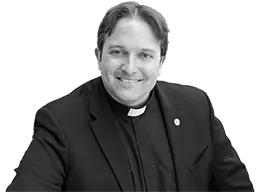
 Fr Matthew Charlesworth SJJesuit PriestSociety of JesusJesuit priest working in Southern AfricaFr. MatthewCharlesworthSJ
 Tuesday of the 6th Week in Ordinary Time
Date: | Season: Ordinary Time before Easter | Year: A
First Reading: James 1:12–18
Responsorial Psalm: Psalm 94:12–13a, 14–15, 18–19
| Response: Psalm 94:12a
Gospel Acclamation: John 14:23
Gospel Reading: Mark 8:14–21
Preached at: the Chapel of Emmaus House in the Archdiocese of Harare, Zimbabwe.
Dear brothers in Christ,
If you wanted to describe religious life in one picture, you could do worse than this: a small boat, uncertain waters, one loaf of bread, and Jesus beside us. Poverty, mission, anxiety, trust. It is all there.
Halfway across the lake, the disciples realise they have only one loaf. A quiet calculation begins. Twelve men. One loaf. A long crossing.
Into that moment Jesus says, “Watch out, guard against the leaven of the Pharisees and the leaven of Herod.”
For the Jewish people in his time, leaven, or yeast, was not neutral. Before Passover, every trace of leaven was swept out of the house. Nothing left in the corners. For seven days they ate flat or unleavened bread to remember their escape from Egypt. Yeast came to mean the old life, the old slavery, something that spreads quietly and changes everything. As Saint Paul would later say, a little yeast leavens the whole batch of dough (cf. 1 Cor 5:6).
So when Jesus speaks about yeast, he is warning them. Be careful what you allow into your heart. Even something small can take over.
The yeast of the Pharisees is religion that becomes proud and rigid. The yeast of Herod is a life shaped by power and appetite. Both begin in small ways. A need to be admired. A desire to control. A quiet compromise. Left unchecked, it spreads.
Saint James describes the same movement. Each person is tempted by his own desire, being lured and enticed. Then desire gives birth to sin, and sin, when it is grown, brings death. It begins inside. A thought we welcome. A comfort we cling to. A resistance to what God is asking.
James is clear. God tempts no one. Every good gift comes from the Father of lights. He does not shift like shadows. He gives life. He has given us birth by his word, so that we may be first fruits, a sign that his Kingdom has already begun.
The Psalm speaks gently into our fears. When I said, My foot is slipping, your mercy, O Lord, held me up. When the cares of my heart are many, your consolations cheer my soul. Even the experience of limitation, even the feeling of having only one loaf, can become part of God’s teaching. He forms us through what we lack.
Jesus presses the disciples. Do you not remember?
They have seen five loaves feed five thousand. Twelve baskets gathered afterwards. They have seen seven loaves feed four thousand. Yet here they are, worried about one loaf among twelve of them. The danger is not hunger. It is forgetting.
And here is the point for us now. The real struggle in religious life today is not first about numbers, finances, or strategy. It is about what shapes our hearts. We live in a world that counts everything. Followers. Projects. Budgets. Success.
In our own time, the yeast can be digital. Constant connection. Streaming, scrolling, messaging without measure. We tell ourselves it is harmless, even useful. And often it is. But if we are not watchful, it begins to shape how we think, how we pray, how we rest. We can be physically in community, yet mentally elsewhere. We can enter prayer carrying a thousand images that leave no space for the Lord. A few minutes of distraction become a habit. And our inner life begins to hollow out.
Slowly, without noticing, we begin to count the same way the world counts. We measure fruit by visibility. We measure worth by output. We let anxiety about the future shape our spirit more than trust in Christ. That is the yeast.
If we forget the baskets already filled in our lives, we will live as if we are alone in the boat.
We remember today the Seven Holy Founders of the Servites. Seven wealthy merchants of Florence who walked away from business, comfort and status to follow Christ in prayer and poverty on Mount Senario. They did not begin with numbers or guarantees. They began with trust. A small boat. One loaf. And because they remembered the Lord through their devotion to his Mother, their little beginning became a lasting gift to the Church.
In Ignatian prayer we can place ourselves in that boat. Hear the water. See the one loaf. Notice the anxiety within us. Then lift our eyes to Jesus. Let him meet our gaze and ask, “Do you not yet understand?”
We are not asked to guarantee results. We are asked to remain faithful in the mission given. Influence may come or go. Fidelity must remain.
So as we pray this morning, let us ask quietly:
- What small “yeast” is working in my heart?
- When I feel the limits of my vows, do I see only scarcity, or do I see God teaching me?
- And can I remember, with gratitude, the ways the Lord has already provided more than enough?
Source: https://sj.mcharlesworth.fr/homilies/2026-02feb-17-ya-ot-06/
This homily is shared for personal and pastoral use. Please attribute the author and do not alter the meaning when quoting. If you wish this homily to be translated - there is an option on the website which will allow you to translate it into the language of your choice.
Licenced under a Creative Commons Attribution-NonCommercial-NoDerivatives 4.0 International (CC BY-NC-ND 4.0) license.
The author does not speak for the Society of Jesus or for the Catholic Church.





In preparing this homily, I consulted various resources to deepen my understanding of today’s readings, including using Magisterium AI for assistance. The final content remains the responsibility of the author.