
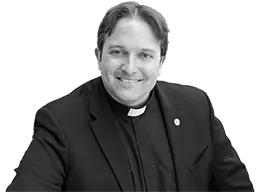
 Fr Matthew Charlesworth SJJesuit PriestSociety of JesusJesuit priest working in Southern AfricaFr. MatthewCharlesworthSJ
 15th Sunday in Ordinary Time
Date: | Season: Ordinary Time after Easter | Year: A
First Reading: Isaiah 55:10–11
Responsorial Psalm: Psalm 65:10–14
| Response: Psalm 8:8
Second Reading: Romans 8:18–23
Gospel Acclamation: The seed is the word of God, Christ is the sower. All who come to him will have life forever.
Gospel Reading: Matthew 13:1–23
Preached at: the Chapel of Emerald Hill Children’s Home in the Archdiocese of Harare, Zimbabwe.
It hasn’t rained for awhile. Most of us know what the earth looks like after a long dry season. The ground becomes hard, the grass disappears, and everything looks brown and lifeless. Then the rain comes - we hope. The ground will become soft, and seeds will begin to grow, and before long, the earth is green again. That’s the image we have in our readings this morning. New life was always hidden in the ground, just waiting for the rain.
In today’s first reading, Isaiah tells us that God’s word is like rain falling upon the earth. God’s word is not merely something we hear with our ears. The inspired Word of God carries life within it. It can soften a hard heart, help kindness to grow and bring hope when we are sad, afraid or discouraged. That’s why we Christians are encouraged to read the bible, to allow the Word of God to nourish our hearts and minds.
In our Gospel, Jesus gives us another picture. He tells us about a farmer who went out to sow. The farmer scattered his seed everywhere. Some fell upon a hard path and was eaten by birds. Some fell upon rocky ground. It began to grow, but it had no deep roots and dried up in the sun. Some fell among thorns and was choked. But some fell into good soil and produced a wonderful harvest.
Jesus explains that the seed is God’s word. It is everything God says to us: “I love you. Do not be afraid. Forgive one another. Tell the truth. Help those in need. Love your neighbour.”
God plants these words within our hearts, but we do not always receive them in the same way.
Sometimes our hearts are like the hard path. We hear what Jesus says, but we do not listen carefully. We may be distracted by our worries, our work, our games or the many things happening around us. We hear Jesus say, “Be kind,” but five minutes later we are unkind again. The word has remained on the surface and has not entered our heart.
Sometimes our hearts are like the rocky ground. We hear the word and become excited. We decide that from now on we will always be patient, generous and forgiving. But then someone annoys us, laughs at us or treats us unfairly—and all our good intentions disappear.
The seed began to grow, but it did not have strong roots. Faith needs roots if it is to survive difficult times. We grow those roots by praying, listening at Mass, reading the stories of Jesus and practising what he teaches. We learn to be kind even when kindness is difficult. When we fail, as we all sometimes do, we ask God’s forgiveness and begin again.
Sometimes our hearts are filled with thorns. Jesus says that these thorns include our worries and our desire to possess more and more.
We can all get distracted. It is not wrong to think about school, work, sport, friends, money or our families. These things are important. But they can fill our minds so completely that we forget about God and other people. We may become so concerned about having the newest clothes, toy, game, car or phone that we forget to be grateful for what we already have. When worries and possessions become more important than God and other people, they begin to choke the good seed.
Then there is the good soil. Good soil does not merely hear God’s word. It allows the word to grow and become visible in the way we live.
If we hear Jesus say, “Welcome others,” and then sit beside someone who is lonely, the seed is growing.
If we hear, “Forgive,” and try to make peace after an argument, the seed is growing.
If we hear, “Care for creation,” and avoid wasting water or throwing rubbish on the ground, the seed is growing.
If we hear, “Love your neighbour,” and share what we have, the seed is growing.
We must be careful, however, not to look around and decide, “I am the good soil, but that person is rocky ground.” Jesus did not tell this parable so that we could judge other people. All four kinds of soil can be found within each one of us. There are parts of our lives where we listen to God and respond generously. There are other parts where we are distracted, shallow, worried or unwilling to change.
The good news is that soil can change. Hard ground can be broken open. Stones can be removed. Thorns can be pulled out. God can do that within us. God never looks at the difficult parts of our lives and says, “I give up.”
The Sower continues sowing because God never gives up on us.
St. Paul tells us that the whole of creation is still waiting and growing. Our world is not yet everything God wants it to be. There is still suffering, selfishness and unfairness. We ourselves are not yet everything God is calling us to become. But God is working, even when we cannot see what he is doing.
When a seed is beneath the ground, it may appear that nothing is happening. Yet quietly, where nobody can see, roots are beginning to grow. In the same way, God may be working within us even when change seems slow. We should not become discouraged.
We are called not only to receive seeds but also to become sowers. We sow seeds whenever we speak a kind word, encourage someone, forgive, share, tell the truth, defend someone who is being treated badly or care for God’s creation. We may not immediately see what grows from these small actions, but God can use them to produce something beautiful.
Our challenge this week is to choose one seed from God’s word—perhaps kindness, patience, forgiveness, truthfulness or generosity—and plant it through something we do. Children can do this. Adults can do it. Every one of us can help God’s love to grow in our homes, schools, workplaces and communities.
At this Mass, Jesus speaks his word to us and feeds us at his table. He does not merely ask us to bear fruit; he gives us the grace we need. Let us ask him to soften what has become hard, deepen what is shallow and clear away whatever is choking our faith.
The Sower has not given up on the soil of our hearts. May we listen to God’s word, allow it to grow within us and share its fruits with others.
Amen.
Source: https://sj.mcharlesworth.fr/homilies/2026-07jul-12-ya-ot-15/
This homily is shared for personal and pastoral use. Please attribute the author and do not alter the meaning when quoting. If you wish this homily to be translated - there is an option on the website which will allow you to translate it into the language of your choice.
Licenced under a Creative Commons Attribution-NonCommercial-NoDerivatives 4.0 International (CC BY-NC-ND 4.0) license.
The author does not speak for the Society of Jesus or for the Catholic Church.





In preparing this homily, I consulted various resources to deepen my understanding of today’s readings, including using Magisterium AI for assistance. The final content remains the responsibility of the author.