
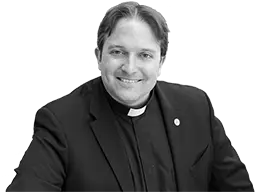
 Fr Matthew Charlesworth SJJesuit PriestSociety of JesusJesuit priest working in Southern AfricaFr. MatthewCharlesworthSJ
 32nd Sunday in Ordinary Time
Date: | Season: Ordinary Time after Easter | Year: A
First Reading: Wisdom of Solomon 6:12–16
Responsorial Psalm: Psalm 63:2–8
| Response: Psalm 63:2b
Second Reading: 1 Thessalonians 4:13–18
Gospel Acclamation: Matthew 24:42a, 44
Gospel Reading: Matthew 25:1–13
Preached at: Our Lady of the Wayside Parish, Mount Pleasant and the Chapel of Emerald Hill Children’s Home in the Archdiocese of Harare, Zimbabwe.
In today’s Gospel, Jesus tells us the parable of the ten bridesmaids: five wise and five foolish. The wise are ready when the bridegroom arrives; the foolish are not.
But there is something surprising about this parable. At the end, Jesus tells us to stay awake, because we do not know the day or the hour. Yet if we listen carefully, we discover that all ten bridesmaids fell asleep. Even the wise ones!
So what made five of them wise? It was not that they managed to stay awake while the others slept. It was that they had prepared. They had brought enough oil for their lamps, even though they did not know how long they would have to wait.
Being ready for God does not mean living in constant anxiety, afraid that he might catch us unprepared. It means living wisely, so that whenever he comes, we are ready to welcome him.
Our first reading gives us a beautiful image of this wisdom. We hear that Wisdom is found by those who seek her. But then the reading turns our expectations upside down. The person who rises early to search for Wisdom discovers that she is already sitting at the gate, waiting to be found.
What a wonderful image! We imagine ourselves going out to search for God, only to discover that God has already come looking for us.
This week, in his message to young people, Pope Leo XIV reminded them: “Do not wait until you are perfect before opening yourselves to him.” Christ comes to meet us just as we are.
And that is good advice for all of us, whatever our age. We do not need to have everything sorted out before turning to God. He comes to meet us in our weakness, and invites us to begin again.
Saint Ignatius teaches us to seek and find God in all things. God is already present and active in our lives. We need to learn, with patience and grace, to recognise him.
He may be waiting for us in someone who needs our attention, in an opportunity to forgive, in a moment of quiet prayer, or in a difficult decision where we must choose what is right rather than what is easy.
The Psalm puts this longing into words: “My soul is thirsting for you, O Lord my God.” But sometimes we become so busy with other things that we forget what we are truly thirsting for. We forget to make room for God.
And this brings us back to the oil in the bridesmaids’ lamps.
We might wonder why the wise bridesmaids refused to share their oil. After all, doesn’t Jesus teach us to share what we have?
In his prayer intention for this month, Pope Leo reminds us that everything we have is a gift from God, and that “true wealth is not found in what we keep, but in what we give with love.”
So the parable is not telling us to be selfish or to withhold what we can give. It reminds us that there is something nobody else can do for us: nobody else can make our response to Christ for us.
The oil can remind us of the faith, love and readiness that grow through the choices we make each day.
A child learns to be truthful by telling the truth, even when it means admitting a mistake. We learn to forgive by forgiving, even when it is difficult. We become generous by sharing what we have, even when we would rather keep it for ourselves. And we learn to recognise God’s voice by making time to listen to him in prayer.
These small choices are like the oil in our lamps. They prepare us to recognise and welcome Christ.
And we do not do this alone. God’s grace helps us, and so do the people around us. We cannot borrow someone else’s faith, but we can help one another keep the flame of faith alive.
That is also part of Saint Paul’s message in today’s second reading. He is writing to Christians who are grieving the death of people they love.
Paul does not tell them to stop grieving. He tells them not to grieve like those who have no hope.
Faith does not remove our sadness when someone dies. We still miss them. We still grieve. But because Christ has risen from the dead, we believe that death does not have the final word. We entrust those we love to God, and hope to share with those who have died in Christ the life of the resurrection, and to be with the Lord forever.
And Paul tells us to encourage one another with this hope. When someone is grieving, we do not always need clever words. Sometimes sitting beside them, listening to them, or praying with them is enough. In these simple ways, we help one another keep the light of hope burning.
There is also a serious warning in the Gospel. When the foolish bridesmaids finally return, the door is already closed.
Jesus reminds us that we cannot keep putting off what matters. If we need to forgive someone, why wait? If someone needs our help, why wait? If we have been neglecting our relationship with God, why not begin again today?
While we have today, the invitation is before us. The time to respond to God’s love is now.
So perhaps we can leave Mass today with three questions.
- First, what am I filling my life with? Am I giving my attention to the things that really matter?
- Second, where might God already be waiting for me? Is there someone I need to forgive, someone I could help, or an invitation from God that I have been ignoring?
- And third, am I helping others to keep their lamps burning? Through my words, my actions and my example, am I helping others to grow in faith, hope and love?
The good news is that we do not have to wait until the end of our lives to encounter Christ. He is already present, already calling us, already helping us to prepare.
And as we celebrate the Eucharist, we are reminded that the one for whom we wait is also the one who comes to meet us here and now.
May we have the wisdom to recognise him, the generosity to respond to him, and the hope to welcome him whenever he comes.
Amen.
Source: https://sj.mcharlesworth.fr/homilies/2026-11nov-08-ya-ot-32/
This homily is shared for personal and pastoral use. Please attribute the author and do not alter the meaning when quoting. If you wish this homily to be translated - there is an option on the website which will allow you to translate it into the language of your choice.
Licenced under a Creative Commons Attribution-NonCommercial-NoDerivatives 4.0 International (CC BY-NC-ND 4.0) license.
The author does not speak for the Society of Jesus or for the Catholic Church.





In preparing this homily, I consulted various resources to deepen my understanding of today’s readings, including using Magisterium AI for assistance. The final content remains the responsibility of the author.